List of Anseriformes by population
This is a list of Anseriformes species by global population. While numbers are estimates, they have been made by the experts in their fields.
| The population of birds |
|---|
 |
Anseriformes (Anser being Latin for "goose") is the taxonomic order to which the ducks, geese, swans, and screamers belong. BirdLife International has assessed 166 species; 89 (54% of total species) have had their population estimated. A variety of methods are used for counting waterfowl. For example, in North America, national and sub-national agencies use planes and helicopters to make aerial transects of breeding populations, and extrapolate these counts over the species' known ranges. Methodologies are continuously being refined; thus estimates can be expected to become more accurate over time. Forecasts can be made by studying habitat condition trends and by interviewing local experts.[1] For more information on how these estimates were ascertained, see Wikipedia's articles on population biology and population ecology.
The first bird in this list, the crested shelduck, retains a status of Critically Endangered on the IUCN Red List but may in fact be extinct. The last confirmed reporting was in 1964 near Vladivostok. North Korea claimed a sighting in March 1971, but this record is highly suspect. Unconfirmed reports do, however, periodically roll in from Northeast China, giving scientists hope that the last individual has not yet died.[2] To be assessed as Critically Endangered a species must have experienced a decline of at least 80% in the past ten years or three generations, or be projected to decline that much in the future ten years or three generations.[3] As some species below are rapidly approaching their minimum viable population (MVP), the future may see their removal from the list and addition to the preceding paragraph.
Extinct species:
- Réunion shelduck, the last of which had been hunted by 1710;[4]
- Mauritian shelduck, which was plentiful in 1681 and extinct in 1698;[5]
- Amsterdam duck, reported to be the favourite dish of Île Amsterdam's five resident sealers until 1793;[6][7]
- Mauritian duck, which was found in "great numbers" in 1681 and last reported in 1696;[8]
- Mariana mallard, a pair of which would not breed at SeaWorld and which has not been encountered since the death of the last individual there in 1981;[9]
- Finsch's duck, once the most abundant waterfowl species in New Zealand;[10]
- Labrador duck, which has not been seen in northeast North America since 1875;[11]
- Auckland merganser, all searches for which have been for naught since the last recording in 1902.[12]
Species by global population
| Common name | Binomial name | Population | Status | Trend | Notes | Image |
|---|---|---|---|---|---|---|
| Crested shelduck | Tadorna cristata | 1-49[13] | CR[13] | ?[13] | 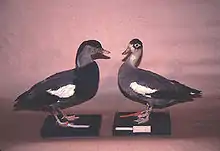 | |
| Madagascar pochard | Aythya innotata | 20-49[14] | CR[14] |  [14] [14] | Rediscovered in 2008.[14] |  |
| Brazilian merganser | Mergus octosetaceus | 50-249[15] | CR[15] |  [15] [15] | This is a precautionary estimate. Actual population may exceed this estimate.[15] | 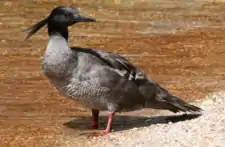 |
| Baer's pochard | Aythya baeri | 150-700[16] | CR[16] | [16] | 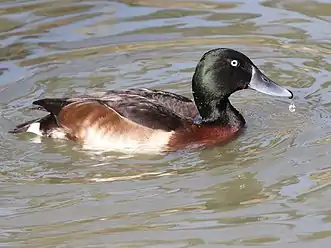 | |
| Andaman teal | Anas albogularis | 250-999[17] | VU[17] | [17] |
Estimate is for mature individuals only; numbers may be higher.[17] | .jpg.webp) |
| White-winged duck | Asarcornis scutulata | 250-999[18] | EN[18] | [18] |
.jpg.webp) | |
| Auckland teal | Anas aucklandica | 300-1,7001000-1,700[19] | NT[19] | [19] | First given estimate is obtained from considering multiple counts over the years. The second is purely the 2016 estimate.[19] | 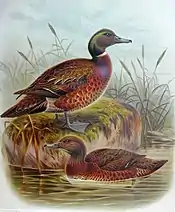 |
| White-winged duck | Cairina scutulata | 350 – 1500[20] | EN[20] | [20] | 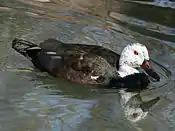 | |
| Campbell teal | Anas nesiotis | > c. 500[21] | VU[21] | [21] | No formal count has been conducted. This is an opportunistic estimate.[21] | 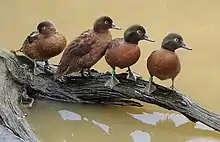 |
| Laysan duck | Anas laysanensis | 500-680[22] | CR[22] |  [22] [22] | No total population estimate is given due to the birds rarity.[22] | 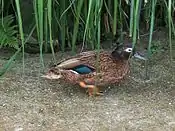 |
| Bernier's teal | Anas bernieri | 630-1,900[23] | EN[23] | [24] | Total population is not given. This estimate for mature individuals is based on multiple counts over the years.[23] | 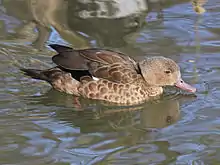 |
| Blue duck | Hymenolaimus malacorhynchos | 1,200[24] | EN[24] | [24] | _at_Staglands%252C_Akatarawa%252C_New_Zealand.jpg.webp) | |
| Meller's duck | Anas melleri | 1,300-3,300[25] | EN[25] | [25] | Total population estimated at 2,000-5,000 individuals.[25] | 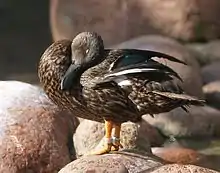 |
| Hawaiian duck | Anas wyvilliana | 1,500[26] | EN[26] | [26] | Total population estimated at 2,200 individuals.[26] | 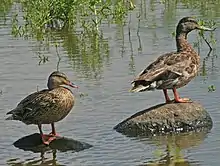 |
| Northern screamer | Chauna chavaria | 1,500-7,000[27] | NT[27] | [27] | 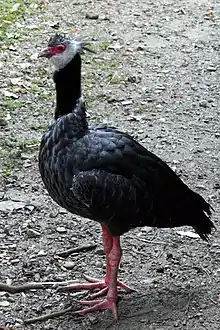 | |
| Brown teal | Anas chlorotis | 1,600-2,200[28] | NT[28] | [28] | Total population estimated at 2,400-3,400 individuals.[28] | 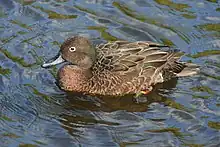 |
| Bronze-winged duck | Speculanas specularis | 1,500-7,000[29] | NT[29] | [29] | Total population estimated at under 10,000 individuals, leading to estimate 2,500-9,999 (made in 2002).[29] | 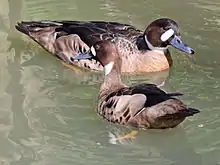 |
| Nene | Branta sandvicensis | 1,700-2,200[30] | NT[30] | [30] | 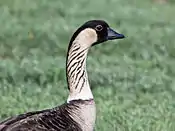 | |
| Salvadori's teal | Salvadorina waigiuensis | 2500 – 20 000[31] | VU[31] | [31] | 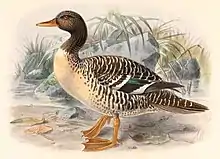 | |
| Scaly-sided merganser | Mergus squamatus | 2,400-4,500[32] | EN[32] | [32] | Estimate is rough; further research needed.[32] | 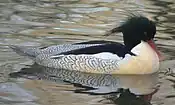 |
| Blue-winged goose | Cyanochen cyanoptera | 3,000-7,000[33] | NT[33] | [33] | 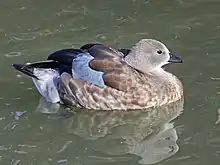 | |
| New Zealand scaup | Aythya novaeseelandiae | 3,300-6,700[34] | LC[34] | [34] | 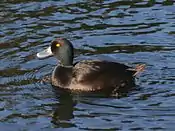 | |
| Philippine duck | Anas luzonica | 3,300-6,700[35] | VU[35] | [35] | Total population is estimated to fall between 5,000 and 10,000 from counts in 2004 and 2005.[35] | 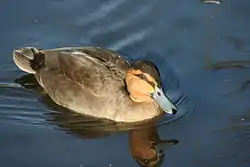 |
| Chubut steamer duck | Tachyeres leucocephalus | 3,400-3,700[36] | VU[36] | [36] | Total population estimated at 5,300-5,600 individuals from a count in 2011.[36] | .PNG.webp) |
| Maccoa duck | Oxyura maccoa | 4,800-5,700[37] | EN[37] | [37] | Estimate from observations in East and South Africa.[37] | 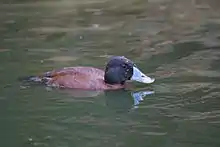 |
| White-headed duck | Oxyura leucocephala | 5,300-8,700[38] | EN[38] | [38] | Breeding pairs estimates at 500–1,200 mature individuals.[38] | 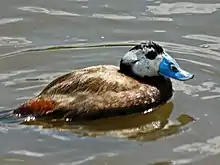 |
| West Indian whistling duck | Dendrocygna arborea | 6,000-15,000[39] | NT[39] | [39] | This estimate is conservative- actual population may be larger.[39] | _RWD2.jpg.webp) |
| Andean teal | Anas andium | 6,000-15,000[40] | LC[40] | [40] | Total population estimated 10,000-19,999 individuals.[40] | 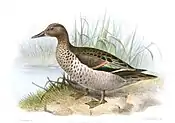 |
| Spotted whistling duck | Dendrocygna guttata | 6,700-17,000[41] | LC[41] | [41] | 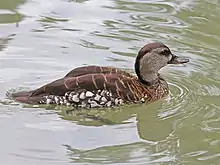 | |
| Coscoroba swan | Coscoroba coscoroba | 6,700-17,000 | LC | | 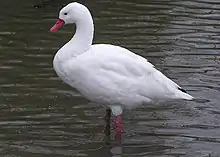 | |
| Magellanic steamerduck | Tachyeres pteneres | 6,700-67,000[42] | LC[42] | [42] |
There is little to no evidence of any declines in population, so assumed to be stable. There is no total population estimate.[42] | .PNG.webp) |
| Sunda teal | Anas gibberifrons | 6,700-67,000[43] | NT[43] | [43] |
Total population estimated at 10,000-100,000.[43] | 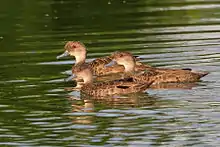 |
| Freckled duck | Stictonetta naevosa | 7,300-17,000[44] | LC[44] | [44] | 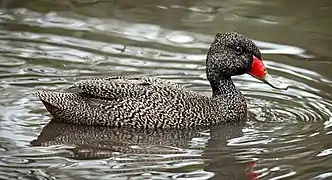 | |
| Flying steamerduck | Tachyeres patachonicus | 7,300-18,000[45] | LC[45] | [45] |
Global population is estimated at 11,000-26,000 individuals. Falkland Islands populations is estimate at 600–1,200 total birds.[45] | _(5).jpg.webp) |
| White-backed duck | Thalassornis leuconotus | 8,000-19,000[46] | LC[46] | [46] | 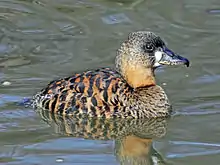 | |
| Orinoco goose | Neochen jubata | 10,000-25,000[47] | NT[47] | [47] | 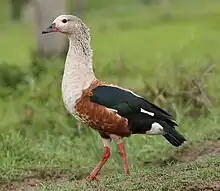 | |
| Cape Barren goose | Cereopsis novaehollandiae | 11,000-12,000[48] | LC[48] | [48] | 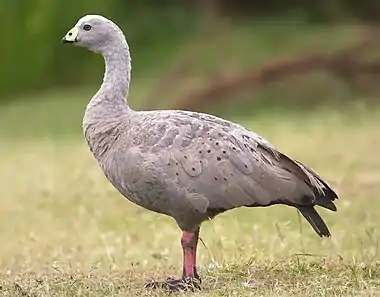 | |
| Flying steamer duck | Tachyeres patachonicus | 11 000 – 26 000[49] | LC[49] | [49] | | |
| Torrent duck | Merganetta armata | 13,000-23,000[50] | LC[50] | [50] |
_-_Macho_(16286015670).jpg.webp) | |
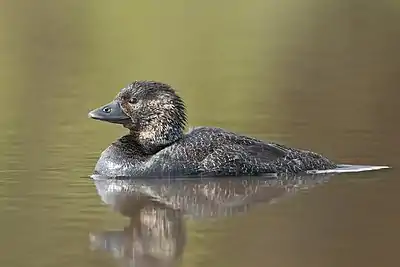
| Musk duck | Biziura lobata | 13,000-33,000[51] | LC[51] | [51] |
 | |
| Cape shoveler | Spatula smithii | 13,000-33,000[52] | LC[52] | [52] |
This estimate is only for mature individuals. A total population estimate is not given.[52] | .jpg.webp) |
| Blue-billed duck | Oxyura australis | 11,000-19,000c. 15,000[53] | LC[53] | [53] | 15,000 is the best estimate, with the full range also given.[53] | 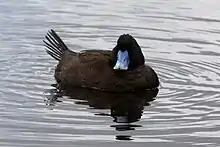 |
| Lesser white-fronted goose | Anser erythropus | 16,000-27,000[54] | VU[54] | [54] | _-_Weltvogelpark_Walsrode_2011.jpg.webp) | |
| Masked duck | Nomonyx dominicus | 16,000-200,000[55] | LC[55] | [55] | These are extreme estimates due to uncertainty on population.[55] | 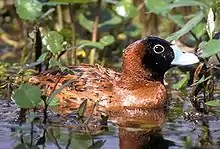 |
| Lake duck | Oxyura vittata | 25,000-100,000[56] | LC[56] | [56] |
_(15770041517).jpg.webp) | |
| Ringed teal | Callonetta leucophrys | 25,000-100,000[57] | LC[57] | [57] |
||
| American comb duck | Sarkidiornis sylvicola | 25,000-100,000[58] | LC[58] | [58] |
||
| Hartlaub's duck | Pteronetta hartlaubii | 26,000-110,000[59] | LC[59] | [59] | 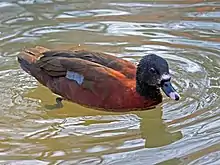 | |
| Eaton's pintail | Anas eatoni | 31,200-41,400[60] | VU[60] | [60] | Has not been estimated since the 1980s; numbers have probably declined. Total population is estimated at 45,000-60,000.[60] | 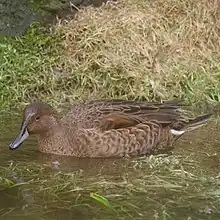 |
| Andean duck | Oxyura ferruginea | 35,000-110,000[61] | LC[61] | [61] |
Estimate includes 10,000 of andina subspecies and 25,000-100,000 of ferruginea subspecies.[61] | |
| Red-breasted goose | Branta ruficollis | 37 000[62] | EN[62] | [62] | Minimum estimate.[62] | 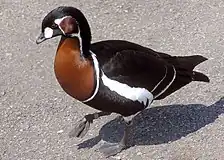 |
| Ruddy-headed goose | Chloephaga rubidiceps | 43,000-82,000[63] | LC[63] | [63] | 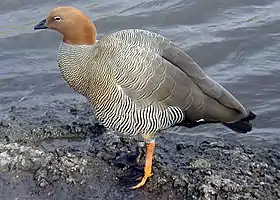 | |
| Red-breasted merganser | Mergus serrator | 44,000-56,000[64] | VU[64] | [64] | This estimate comes from multiple population estimates over the past two decades.[64] | 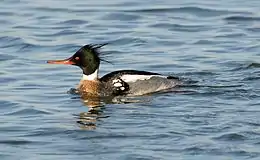 |
| Trumpeter swan | Cygnus buccinator | 50,000[65] | LC[65] | [65] |
.jpg.webp) | |
| Marbled duck | Marmaronetta angustirostris | 55,000-61,000[66] | VU[66] | [66] | This estimate includes the following: 3,000-6,000 in Mediterranean and West Africa, 5,000 in south Asia, and 46,000-50,000 in south-western Asia.[66] | _RWD2.jpg.webp) |
| Muscovy duck | Cairina moschata | 50,000-499,999[67] | LC[67] | [67] | 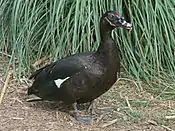 | |
| Swan goose | Anser cygnoides | 60,000-90,000[68] | VU[68] | [68] | 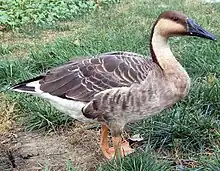 | |
| Mandarin duck | Aix galericulata | 65,000-66,000[69] | LC[69] | [69] | This esimate includes the following: 100–10,000 breeding pairs in China, 100 in Taiwan, 100–10,000 in Korea, and 10,000-100,000 in Japan.[69] |  |
| Emperor goose | Chen canagica | > c. 85 000[70] | NT[70] | [70] | .jpg.webp) | |
| Falcated duck | Mareca falcata | > 89,000[71] | NT[71] | [71] | 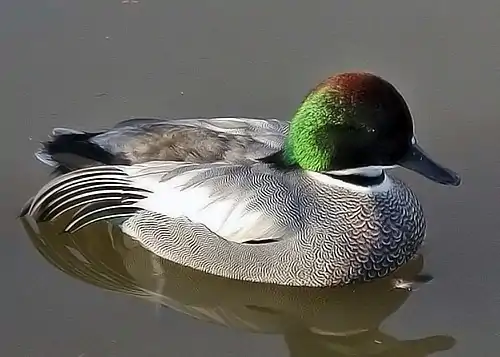 | |
| Black swan | Cygnus atratus | 100,000-1,000,000[72] | LC[72] | [72] | 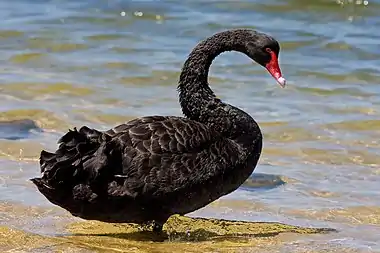 | |
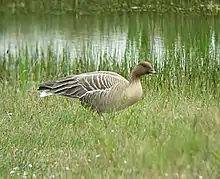
| Pink-footed goose | Anser brachyrhynchus | 114,000-148,000[73] | LC[73] | [73] |
 | |
| Smew | Mergellus albellus | > 130,000[74] | LC[74] | [74] | European population estimated at 18,300-35,200 mature individuals.[74] | 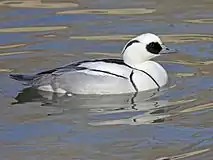 |
| Stellar's eider | Polysticta stelleri | 130,000-150,000[75] | VU[75] | [75] |
||
| Cotton pygmy-goose | Nettapus coromandelianus | 130,000-1,100,000[76] | LC[76] | [76] |  | |
| Velvet scoter | Melanitta fusca | 141,000-268,000[77] | VU[77] | [77] | 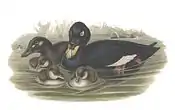 | |
| Indian spot-billed duck | Anas poecilorhyncha | 150,000-1,100,000[78] | LC[78] | [78] |
This estimate includes the Chinese Spot-billed Duck, as the count was conducted before the taxonomy change.[78] | 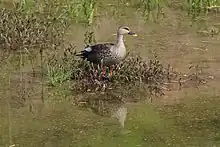 |
| Mute swan | Cygnus olor | 167,000-231,000[79] | LC[79] | [79] | 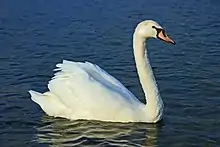 | |
| Ruddy shelduck | Tadorna ferruginea | 170,000-220,000[80] | LC[80] | ?[80] | European population is estimated at 33,900-53,100 mature individuals.[80] | 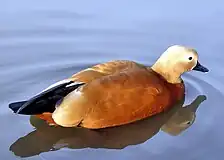 |
| Barrow's goldeneye | Bucephala islandica | 175,000-200,000[81] | LC[81] | [81] |
European population is 1,600-1,800 mature individuals, North American population is 180,000 mature individuals, but Alaskan population is unknown.[81] | |
| Whooper swan | Cygnus cygnus | > c. 180,000[82] | LC[82] | ?[82] | Europe has approx. 50,600-65,500 mature individuals, and Russia has 10,000-100,000 breeding pairs.[82] | 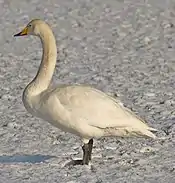 |
| Ferruginous duck | Aythya nyroca | 180,000-240,000[83] | NT[83] | [83] |
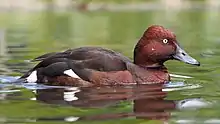 | |
| Pacific black duck | Anas superciliosa | 180,000-1,200,000[84] | LC[84] | ?[84] | This is for the total population only. The population has decreased significantly over the last fifty years.[84] | 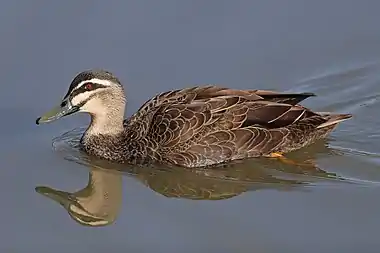 |
| Harlequin duck | Histrionicus histrionicus | 190,000-380,000[85] | LC[85] | [85] | Russian estimate is 10,000-100,000 breeding pairs and 4,000-7,000 pairs in Europe.[85] | 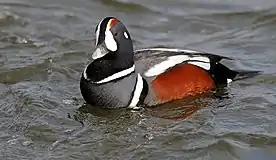 |
| Lesser whistling duck | Dendrocygna javanica | 200,000-2,000,000[86] | LC[86] | [86] | _Weltvogelpark_Walsrode_2012-009.jpg.webp) | |
| Black-bellied whistling duck | Dendrocygna autumnalis | 200,000-2,000,000[87] | LC[87] | [87] | 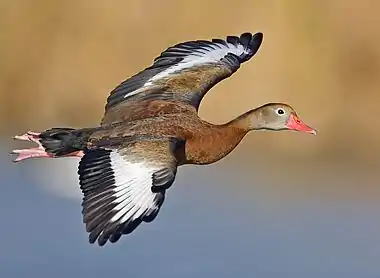 | |
| Spectacled eider | Somateria fischeri | 250,000[88] | NT[88] | [88] | 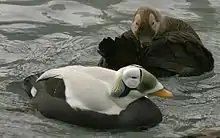 | |
| Surf scoter | Melanitta perspicillata | 250,000-1,300,000[89] | LC[89] | [89] | 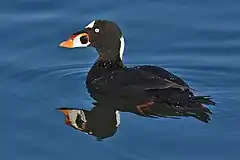 | |
| Tundra swan | Cygnus columbianus | 317,000-336,000[90] | LC[90] | ?[90] | European breeding population is 10,000-12,000 mature individuals.[90] | 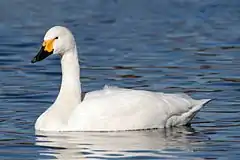 |
| Black scoter | Melanitta americana | 350,000-560,000[91] | NT[91] | [91] | 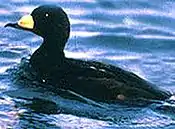 | |
| Cinnamon teal | Spatula cyanoptera | 380,000[92] | LC[92] | [92] |
.jpg.webp) | |
| Siberian scoter | Melanitta stenjnegeri | 400,000-700,000[93] | LC[93] | [93] |
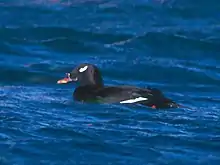 | |
| Common shelduck | Tadorna tadorna | 415,000-500,000[94] | LC[94] | [94] | .jpg.webp) | |
| Red-crested pochard | Netta rufina | 420,000-600,000[95] | LC[95] | ?[95] | Estimate includes European population at 55,100-86,000 mature individuals.[95] | 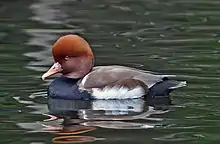 |
| Brant goose | Branta bernicla | 490,000[96] | LC[96] | ?[96] | European population is 3,000-3,600 mature individuals.[96] | 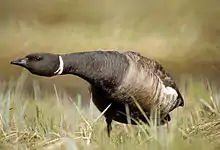 |
| White-winged scoter | Melanitta deglandi | 600 000 – 1 000 000[97] | LC[97] | [97] | 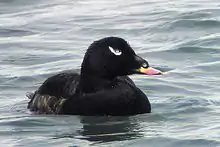 | |
| Bean goose | Anser fabalis | 680,000-800,000[98] | LC[98] | [98] |
.jpg.webp) | |
| Canvasback | Aythya valisineria | 690,000[99] | LC[99] | [99] |
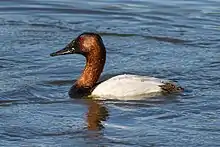 | |
| American black duck | Anas rubripes | 700,000[100] | LC[100] | [100] |
No global population estimate given.[100] | 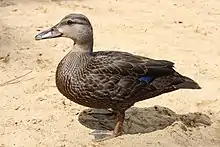 |
| Common pochard | Aythya ferina | 760,000-790,000[101] | VU[101] | [101] | 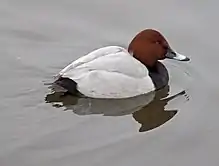 | |
| King eider | Somateria spectabilis | 800,000-900,000[102] | LC[102] | [102] |  | |
| Barnacle goose | Branta leucopsis | 880,000[103] | LC[103] | [103] |
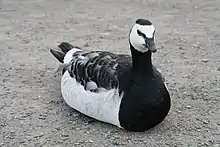 | |
| Eastern spot-billed duck | Anas zonorhyncha | 800,000-1,600,000[104] | LC[104] | [104] | This is for the total population- no mature individuals estimate is given.[104] | 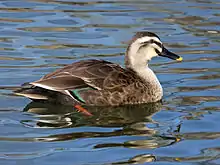 |
| Magpie goose | Anseranas semipalmata | 1,000,000[105] | LC[105] | [105] | 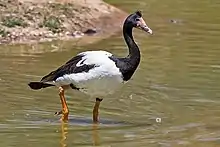 | |
| Rosy-billed pochard | Netta peposaca | 1,000,000[106] | LC[106] | [106] | _RWD.jpg.webp) | |
| Grey teal | Anas gracilis | 1,000,000-1,100,000[107] | LC[107] | [107] | This is the total population estimate. Estimate for mature individuals is not given.[107] | 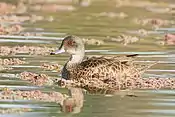 |
| Greylag goose | Anser anser | 1,000,000-1,100,000[108] | LC[108] | [108] | European population is 519,000-853,000 mature individuals[108] |  |
| Common scoter | Melanitta nigra | 1,070,000[109] | LC[109] | ?[109] | European population estimated at 214,000-263,000 mature individuals.[109] | 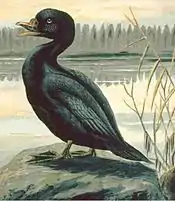 |
| Hooded merganser | Lophodytes cucullatus | 1,100,000[110] | LC[110] | [110] |
||
| Redhead | Aythya americana | 1,200,000[111] | LC[111] | [111] |
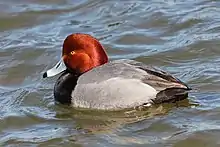 | |
| Greater scaup | Aythya marila | 4,900,000-5,199,999[112] | LC[112] | [112] | 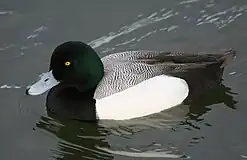 | |
| Bufflehead | Bucephala albeola | 1,300,000[113] | LC[113] | [113] | 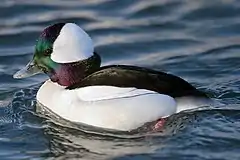 | |
| Fulvous whistling duck | Dendrocygna bicolor | 1,300,000-1,500,000[114] | LC[114] | [114] |  | |
| Common eider | Somateria mollissima | 1,580,000-1,910,000[115] | LC[115] | ?[115] | _in_flight.jpg.webp) | |
| Common merganser | Mergus merganser | 1,700,000-2,400,000[116] | LC[116] | ?[116] | European population is 134,000-206,000 mature individuals.[116] | 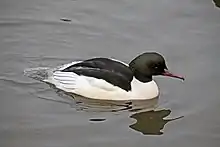 |
| White-faced whistling duck | Dendrocygna viduata | 1,700,000-2,800,000[117] | LC[117] | [117] | 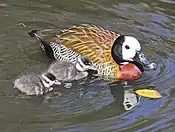 | |
| Ring-necked duck | Aythya collaris | 2,000,000[118] | LC[118] | [118] |
_(26265137481).jpg.webp) | |
| Ross's goose | Anser rossii | 2,100,000[119] | LC[119] | [119] |
_(23108182770).jpg.webp) | |
| Garganey | Anas querquedula | 2,600,000-2,800,000[120] | LC[120] | [120] | European population includes 704,000-1,050,000 mature individuals.[120] | _RWD3.jpg.webp) |
| Tufted duck | Aythya fuligula | 2,600,000-2,900,000[121] | LC[121] | [121] | 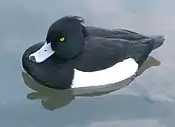 | |
| American wigeon | Mareca americana | 2,700,000[122] | LC[122] | [122] |
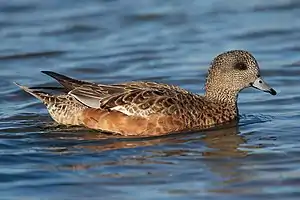 | |
| Common goldeneye | Bucephala clangula | 2,700,000-4,700,000[123] | LC[123] | [123] | Russian population is 100,000-1,000,000 breeding pairs, and European population is 977,000-1,250,000 mature individuals.[123] | 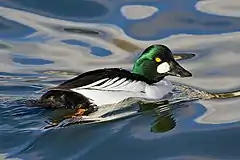 |
| Common teal | Anas crecca | 2,800,000[124] | LC[124] | ?[124] | European population estimated at 1,110,000-1,830,000 mature individuals. No global estimate given.[124] | .jpg.webp) |
| Eurasian wigeon | Mareca penelope | 2,800,000-3,300,000[125] | LC[125] | [125] | European population estimated at 9377,000-1,290,000 mature individuals.[125] | 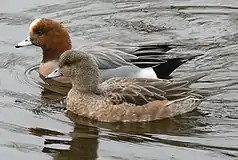 |
| Greater white-fronted goose | Anser albifrons | 3,100,000-3,200,000[126] | LC[126] | ?[126] | _in_flight.jpg.webp) | |
| Long-tailed duck | Clangula hyemalis | 3,200-000-3,750,000[127] | VU[127] | [127] | 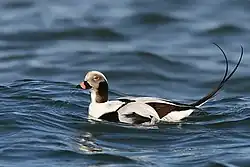 | |
| Green-winged teal | Anas carolinensis | 3,900,000[128] | LC[128] | [128] |
No total population given.[128] | 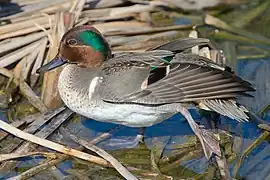 |
| Gadwall | Mareca strepera | 4,300,000-4,900,000[129] | LC[129] | [129] | Global population is estimated a 4,300,000-4,900,000 individuals, with the European population containing 151,000-250,000 mature individuals.[129] | 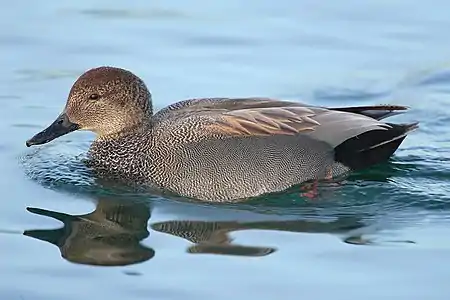 |
| Lesser scaup | Aythya affinis | 3,700,000[130] | LC[130] | [130] |
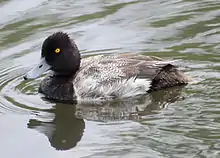 | |
| Cackling goose | Branta hutchinsii | 4,500,000[131] | LC[131] | [131] | 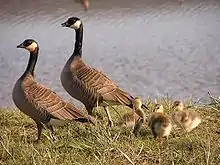 | |
| Wood duck | Aix sponsa | 4,600,000[132] | LC[132] | [132] |
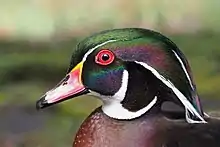 | |
| Northern pintail | Anas acuta | 4,700,000-4,800,000[133] | LC[133] | [133] | Total population is estimated at 7,100,000-7,200,000 individuals. European population includes 419,000-539,000 mature individuals.[133] | _I_IMG_0911.jpg.webp) |
| Canada goose | Branta canadensis | 5,000,000-6,200,000[134] | LC[134] | [134] |
.jpg.webp) | |
| Northern shoveler | Anas clypeata | 4,300,000-4,700,000[135] | LC[135] | [135] | Global population is estimated at 6,500,000-7,000,000 total individuals, and the European population contains 340,000-466,000 mature individuals.[135] | 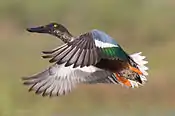 |
| Blue-winged teal | Spatula discors | 7,800,000[136] | LC[136] | [136] |
There is no total population for this estimation- only one for the number of mature individuals.[136] | 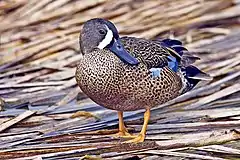 |
| Snow goose | Answer caerulescens | 16,000,000[137] | LC[137] | [137] |
European estimate is 2,000-4,000 mature individuals.[137] | .jpg.webp) |
| Mallard | Anas platyrhynchos | > c. 19,000,000[138] | LC[138] | [138] | European population estimated at 5,700,000-9,220,000 mature individuals.[138] | 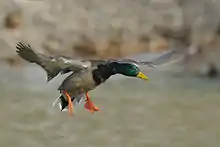 |
References
- United States Fish and Wildlife Service (20 July 2012). "Waterfowl Population Status, 2012" (PDF). Retrieved 2012-12-23.
- BirdLife International (2018). "Tadorna cristata". IUCN Red List of Threatened Species. 2018: e.T22680021A132052989. doi:10.2305/IUCN.UK.2018-2.RLTS.T22680021A132052989.en. Retrieved 20 November 2021.
- IUCN (2001). "V. THE CRITERIA FOR CRITICALLY ENDANGERED, ENDANGERED AND VULNERABLE". Retrieved 2012-12-23.
- BirdLife International (2016). "Alopochen kervazoi". IUCN Red List of Threatened Species. 2016: e.T22729490A95017764. doi:10.2305/IUCN.UK.2016-3.RLTS.T22729490A95017764.en. Retrieved 20 November 2021.
- BirdLife International (2012). "Alopochen mauritianus". IUCN Red List of Threatened Species. 2012. Retrieved 2012-11-28.
- Olson, Storrs L.; Jouventin, Pierre (February 1996). "A new species of small flightless duck from Amsterdam Island, southern Indian Ocean (Anatidae: Anas)" (PDF). The Condor. 98 (1): 1–9. doi:10.2307/1369501. Retrieved 2012-12-23.
- BirdLife International (2016). "Anas marecula". IUCN Red List of Threatened Species. 2016: e.T22728666A94993378. doi:10.2305/IUCN.UK.2016-3.RLTS.T22728666A94993378.en. Retrieved 20 November 2021.
- BirdLife International (2016). "Anas theodori". IUCN Red List of Threatened Species. 2016: e.T22728662A94993214. doi:10.2305/IUCN.UK.2016-3.RLTS.T22728662A94993214.en. Retrieved 20 November 2021.
- Amidon, Fred (23 Feb 2004). "Endangered and Threatened Wildlife and Plants; Removing the Mariana Mallard and the Guam Broadbill From the Federal List of Endangered and Threatened Wildlife" (PDF). Federal Register. 69 (34): 8116–8119. Retrieved 2012-12-23.
- "New Zealand Ecology: Teal". TerraNature Trust. 2010–2011. Retrieved 2012-12-23.
- BirdLife International (2016). "Camptorhynchus labradorius". IUCN Red List of Threatened Species. 2016: e.T22680418A92862623. doi:10.2305/IUCN.UK.2016-3.RLTS.T22680418A92862623.en. Retrieved 20 November 2021.
- BirdLife International (2016). "Mergus australis". IUCN Red List of Threatened Species. 2016: e.T22680496A92864737. doi:10.2305/IUCN.UK.2016-3.RLTS.T22680496A92864737.en. Retrieved 20 November 2021.
- IUCN (2018-08-09). "Tadorna cristata: BirdLife International: The IUCN Red List of Threatened Species 2018: e.T22680021A132052989". doi:10.2305/iucn.uk.2018-2.rlts.t22680021a132052989.en.
{{cite journal}}: Cite journal requires|journal=(help) - IUCN (2016-10-01). "Aythya innotata: BirdLife International: The IUCN Red List of Threatened Species 2018: e.T22680380A128903025". doi:10.2305/iucn.uk.2018-2.rlts.t22680380a128903025.en.
{{cite journal}}: Cite journal requires|journal=(help) - IUCN (2019-02-01). "Mergus octosetaceus: BirdLife International: The IUCN Red List of Threatened Species 2019: e.T22680482A143756439". doi:10.2305/iucn.uk.2019-3.rlts.t22680482a143756439.en.
{{cite journal}}: Cite journal requires|journal=(help) - IUCN (2019-08-15). "Aythya baeri: BirdLife International: The IUCN Red List of Threatened Species 2019: e.T22680384A154436811". doi:10.2305/iucn.uk.2019-3.rlts.t22680384a154436811.en.
{{cite journal}}: Cite journal requires|journal=(help) - IUCN (2016-10-01). "Anas albogularis: BirdLife International: The IUCN Red List of Threatened Species 2017: e.T22727280A110106998". doi:10.2305/iucn.uk.2017-1.rlts.t22727280a110106998.en.
{{cite journal}}: Cite journal requires|journal=(help) - IUCN (2016-10-01). "Asarcornis scutulata: BirdLife International: The IUCN Red List of Threatened Species 2017: e.T22680064A110103586". doi:10.2305/iucn.uk.2017-1.rlts.t22680064a110103586.en.
{{cite journal}}: Cite journal requires|journal=(help) - IUCN (2021-01-20). "Anas aucklandica: BirdLife International: The IUCN Red List of Threatened Species 2021: e.T22680280A194816119". doi:10.2305/iucn.uk.2021-3.rlts.t22680280a194816119.en.
{{cite journal}}: Cite journal requires|journal=(help) - BirdLife International (2012). "Cairina scutulata". IUCN Red List of Threatened Species. 2012. Archived from the original on 2012-11-14. Retrieved 2012-11-28.
- IUCN (2020-03-25). "Anas nesiotis: BirdLife International: The IUCN Red List of Threatened Species 2020: e.T22724580A171601774". doi:10.2305/iucn.uk.2020-3.rlts.t22724580a171601774.en.
{{cite journal}}: Cite journal requires|journal=(help) - IUCN (2018-08-06). "Anas laysanensis: BirdLife International: The IUCN Red List of Threatened Species 2018: e.T22680203A130697270". doi:10.2305/iucn.uk.2018-2.rlts.t22680203a130697270.en.
{{cite journal}}: Cite journal requires|journal=(help) - "Anas bernieri: BirdLife International". IUCN Red List of Threatened Species. 2013-11-01. Retrieved 2022-12-14.
- IUCN (2016-10-01). "Hymenolaimus malacorhynchos: BirdLife International: The IUCN Red List of Threatened Species 2016: e.T22680121A92844858". doi:10.2305/iucn.uk.2016-3.rlts.t22680121a92844858.en.
{{cite journal}}: Cite journal requires|journal=(help) - IUCN (2021-02-09). "Anas melleri: BirdLife International: The IUCN Red List of Threatened Species 2021: e.T22680225A196314602". doi:10.2305/iucn.uk.2021-3.rlts.t22680225a196314602.en.
{{cite journal}}: Cite journal requires|journal=(help) - IUCN (2016-10-01). "Anas wyvilliana: BirdLife International: The IUCN Red List of Threatened Species 2017: e.T22680199A112386802". doi:10.2305/iucn.uk.2017-1.rlts.t22680199a112386802.en.
{{cite journal}}: Cite journal requires|journal=(help) - IUCN (2016-10-01). "Chauna chavaria: BirdLife International: The IUCN Red List of Threatened Species 2016: e.T22679726A92826428". doi:10.2305/iucn.uk.2016-3.rlts.t22679726a92826428.en.
{{cite journal}}: Cite journal requires|journal=(help) - IUCN (2020-08-24). "Anas chlorotis: BirdLife International: The IUCN Red List of Threatened Species 2020: e.T22728303A182985187". doi:10.2305/iucn.uk.2020-3.rlts.t22728303a182985187.en.
{{cite journal}}: Cite journal requires|journal=(help) - IUCN (2016-10-01). "Speculanas specularis: BirdLife International: The IUCN Red List of Threatened Species 2017: e.T22680136A118623100". doi:10.2305/iucn.uk.2017-3.rlts.t22680136a118623100.en.
{{cite journal}}: Cite journal requires|journal=(help) - IUCN (2021-01-14). "Branta sandvicensis: BirdLife International: The IUCN Red List of Threatened Species 2021: e.T22679929A194369606". doi:10.2305/iucn.uk.2021-3.rlts.t22679929a194369606.en.
{{cite journal}}: Cite journal requires|journal=(help) - BirdLife International (2016). "Salvadorina waigiuensis". IUCN Red List of Threatened Species. 2016: e.T22680127A92845212. doi:10.2305/IUCN.UK.2016-3.RLTS.T22680127A92845212.en. Retrieved 20 November 2021.
- IUCN (2016-10-01). "Mergus squamatus: BirdLife International: The IUCN Red List of Threatened Species 2017: e.T22680488A118860238". doi:10.2305/iucn.uk.2017-3.rlts.t22680488a118860238.en.
{{cite journal}}: Cite journal requires|journal=(help) - IUCN (2021-09-22). "Cyanochen cyanoptera: BirdLife International: The IUCN Red List of Threatened Species 2022: e.T22679961A208106800". doi:10.2305/iucn.uk.2022-1.rlts.t22679961a208106800.en.
{{cite journal}}: Cite journal requires|journal=(help) - IUCN (2016-10-01). "Aythya novaeseelandiae: BirdLife International: The IUCN Red List of Threatened Species 2016: e.T22680395A92860915". doi:10.2305/iucn.uk.2016-3.rlts.t22680395a92860915.en.
{{cite journal}}: Cite journal requires|journal=(help) - IUCN (2016-10-01). "Anas luzonica: BirdLife International: The IUCN Red List of Threatened Species 2016: e.T22680214A92849560". doi:10.2305/iucn.uk.2016-3.rlts.t22680214a92849560.en.
{{cite journal}}: Cite journal requires|journal=(help) - IUCN (2018-08-07). "Tachyeres leucocephalus: BirdLife International: The IUCN Red List of Threatened Species 2018: e.T22680038A132524158". doi:10.2305/iucn.uk.2018-2.rlts.t22680038a132524158.en.
{{cite journal}}: Cite journal requires|journal=(help) - IUCN (2021-02-03). "Oxyura maccoa: BirdLife International: The IUCN Red List of Threatened Species 2021: e.T22679820A181759055". doi:10.2305/iucn.uk.2021-3.rlts.t22679820a181759055.en.
{{cite journal}}: Cite journal requires|journal=(help) - IUCN (2017-10-01). "Oxyura leucocephala: BirdLife International: The IUCN Red List of Threatened Species 2017: e.T22679814A119403602". doi:10.2305/iucn.uk.2017-3.rlts.t22679814a119403602.en.
{{cite journal}}: Cite journal requires|journal=(help) - IUCN (2019-07-16). "Dendrocygna arborea: BirdLife International: The IUCN Red List of Threatened Species 2019: e.T22679770A154611660". doi:10.2305/iucn.uk.2019-3.rlts.t22679770a154611660.en.
{{cite journal}}: Cite journal requires|journal=(help) - IUCN (2016-10-01). "Anas andium: BirdLife International: The IUCN Red List of Threatened Species 2016: e.T22735557A95114680". doi:10.2305/iucn.uk.2016-3.rlts.t22735557a95114680.en.
{{cite journal}}: Cite journal requires|journal=(help) - IUCN (2020-08-13). "Dendrocygna guttata: BirdLife International: The IUCN Red List of Threatened Species 2020: e.T22679735A181753150". doi:10.2305/iucn.uk.2020-3.rlts.t22679735a181753150.en.
{{cite journal}}: Cite journal requires|journal=(help) - IUCN (2018-08-13). "Tachyeres pteneres: BirdLife International: The IUCN Red List of Threatened Species 2018: e.T22680033A133081668". doi:10.2305/iucn.uk.2018-2.rlts.t22680033a133081668.en.
{{cite journal}}: Cite journal requires|journal=(help) - IUCN (2016-10-01). "Anas gibberifrons: BirdLife International: The IUCN Red List of Threatened Species 2016: e.T22727271A94945711". doi:10.2305/iucn.uk.2016-3.rlts.t22727271a94945711.en.
{{cite journal}}: Cite journal requires|journal=(help) - IUCN (2016-10-01). "Stictonetta naevosa: BirdLife International: The IUCN Red List of Threatened Species 2016: e.T22679836A92831716". doi:10.2305/iucn.uk.2016-3.rlts.t22679836a92831716.en.
{{cite journal}}: Cite journal requires|journal=(help) - IUCN (2018-08-07). "Tachyeres patachonicus: BirdLife International: The IUCN Red List of Threatened Species 2018: e.T22680052A132524796". doi:10.2305/iucn.uk.2018-2.rlts.t22680052a132524796.en.
{{cite journal}}: Cite journal requires|journal=(help) - IUCN (2016-10-01). "Thalassornis leuconotus: BirdLife International: The IUCN Red List of Threatened Species 2016: e.T22679785A92830036". doi:10.2305/iucn.uk.2016-3.rlts.t22679785a92830036.en.
{{cite journal}}: Cite journal requires|journal=(help) - IUCN (2016-10-01). "Neochen jubata: BirdLife International: The IUCN Red List of Threatened Species 2016: e.T22679987A92837649". doi:10.2305/iucn.uk.2016-3.rlts.t22679987a92837649.en.
{{cite journal}}: Cite journal requires|journal=(help) - IUCN (2018-08-09). "Cereopsis novaehollandiae: BirdLife International: The IUCN Red List of Threatened Species 2018: e.T22679958A131910442". doi:10.2305/iucn.uk.2018-2.rlts.t22679958a131910442.en.
{{cite journal}}: Cite journal requires|journal=(help) - BirdLife International (2018). "Tachyeres patachonicus". IUCN Red List of Threatened Species. 2018: e.T22680052A132524796. doi:10.2305/IUCN.UK.2018-2.RLTS.T22680052A132524796.en. Retrieved 20 November 2021.
- IUCN (2016-10-01). "Merganetta armata: BirdLife International: The IUCN Red List of Threatened Species 2016: e.T22680118A92844656". doi:10.2305/iucn.uk.2016-3.rlts.t22680118a92844656.en.
{{cite journal}}: Cite journal requires|journal=(help) - IUCN (2016-10-01). "Biziura lobata: BirdLife International: The IUCN Red List of Threatened Species 2016: e.T22679830A92831295". doi:10.2305/iucn.uk.2016-3.rlts.t22679830a92831295.en.
{{cite journal}}: Cite journal requires|journal=(help) - IUCN (2016-10-01). "Spatula smithii: BirdLife International: The IUCN Red List of Threatened Species 2016: e.T22680236A92852018". doi:10.2305/iucn.uk.2016-3.rlts.t22680236a92852018.en.
{{cite journal}}: Cite journal requires|journal=(help) - IUCN (2021-11-15). "Oxyura australis: BirdLife International: The IUCN Red List of Threatened Species 2022: e.T22679827A210733513". doi:10.2305/iucn.uk.2022-1.rlts.t22679827a210733513.en.
{{cite journal}}: Cite journal requires|journal=(help) - IUCN (2018-08-06). "Anser erythropus: BirdLife International: The IUCN Red List of Threatened Species 2018: e.T22679886A132300164". doi:10.2305/iucn.uk.2018-2.rlts.t22679886a132300164.en.
{{cite journal}}: Cite journal requires|journal=(help) - IUCN (2019-11-29). "Nomonyx dominicus: BirdLife International: The IUCN Red List of Threatened Species 2021: e.T22679789A137758280". doi:10.2305/iucn.uk.2021-3.rlts.t22679789a137758280.en.
{{cite journal}}: Cite journal requires|journal=(help) - IUCN (2020-11-13). "Oxyura vittata: BirdLife International: The IUCN Red List of Threatened Species 2021: e.T22679824A189960778". doi:10.2305/iucn.uk.2021-3.rlts.t22679824a189960778.en.
{{cite journal}}: Cite journal requires|journal=(help) - IUCN (2021-01-19). "Callonetta leucophrys: BirdLife International: The IUCN Red List of Threatened Species 2021: e.T22680101A194736119". doi:10.2305/iucn.uk.2021-3.rlts.t22680101a194736119.en.
{{cite journal}}: Cite journal requires|journal=(help) - IUCN (2016-10-01). "Sarkidiornis sylvicola: BirdLife International: The IUCN Red List of Threatened Species 2016: e.T22724744A94877265". doi:10.2305/iucn.uk.2016-3.rlts.t22724744a94877265.en.
{{cite journal}}: Cite journal requires|journal=(help) - IUCN (2016-10-01). "Pteronetta hartlaubii: BirdLife International: The IUCN Red List of Threatened Species 2016: e.T22680070A92841893". doi:10.2305/iucn.uk.2016-3.rlts.t22680070a92841893.en.
{{cite journal}}: Cite journal requires|journal=(help) - IUCN (2016-10-01). "Anas eatoni: BirdLife International: The IUCN Red List of Threatened Species 2016: e.T22680306A92854679". doi:10.2305/iucn.uk.2016-3.rlts.t22680306a92854679.en.
{{cite journal}}: Cite journal requires|journal=(help) - IUCN (2016-10-01). "Oxyura ferruginea: BirdLife International: The IUCN Red List of Threatened Species 2016: e.T22727757A94961092". doi:10.2305/iucn.uk.2016-3.rlts.t22727757a94961092.en.
{{cite journal}}: Cite journal requires|journal=(help) - BirdLife International (2017). "Branta ruficollis". IUCN Red List of Threatened Species. 2017: e.T22679954A118577901. doi:10.2305/IUCN.UK.2017-3.RLTS.T22679954A118577901.en. Retrieved 20 November 2021.
- IUCN (2016-10-01). "Chloephaga rubidiceps: BirdLife International: The IUCN Red List of Threatened Species 2016: e.T22679984A92837451". doi:10.2305/iucn.uk.2016-3.rlts.t22679984a92837451.en.
{{cite journal}}: Cite journal requires|journal=(help) - IUCN (2016-10-01). "Branta ruficollis: BirdLife International: The IUCN Red List of Threatened Species 2017: e.T22679954A118577901". doi:10.2305/iucn.uk.2017-3.rlts.t22679954a118577901.en.
{{cite journal}}: Cite journal requires|journal=(help) - IUCN (2020-08-21). "Cygnus buccinator: BirdLife International: The IUCN Red List of Threatened Species 2021: e.T22679859A136992006". doi:10.2305/iucn.uk.2021-3.rlts.t22679859a136992006.en.
{{cite journal}}: Cite journal requires|journal=(help) - IUCN (2016-10-01). "Marmaronetta angustirostris: BirdLife International: The IUCN Red List of Threatened Species 2017: e.T22680339A110054350". doi:10.2305/iucn.uk.2017-1.rlts.t22680339a110054350.en.
{{cite journal}}: Cite journal requires|journal=(help) - IUCN (2018-08-09). "Cairina moschata: BirdLife International: The IUCN Red List of Threatened Species 2018: e.T22680061A131911211". doi:10.2305/iucn.uk.2018-2.rlts.t22680061a131911211.en.
{{cite journal}}: Cite journal requires|journal=(help) - IUCN (2016-10-01). "Anser cygnoid: BirdLife International: The IUCN Red List of Threatened Species 2016: e.T22679869A92832782". doi:10.2305/iucn.uk.2016-3.rlts.t22679869a92832782.en.
{{cite journal}}: Cite journal requires|journal=(help) - IUCN (2018-08-09). "Aix galericulata: BirdLife International: The IUCN Red List of Threatened Species 2018: e.T22680107A131911544". doi:10.2305/iucn.uk.2018-2.rlts.t22680107a131911544.en.
{{cite journal}}: Cite journal requires|journal=(help) - IUCN (2016-10-01). "Anser canagicus: BirdLife International: The IUCN Red List of Threatened Species 2016: e.T22679919A92834737". doi:10.2305/iucn.uk.2016-3.rlts.t22679919a92834737.en.
{{cite journal}}: Cite journal requires|journal=(help) - IUCN (2016-10-01). "Mareca falcata: BirdLife International: The IUCN Red List of Threatened Species 2016: e.T22680153A92846435". doi:10.2305/iucn.uk.2016-3.rlts.t22680153a92846435.en.
{{cite journal}}: Cite journal requires|journal=(help) - IUCN (2018-08-09). "Cygnus atratus: BirdLife International: The IUCN Red List of Threatened Species 2018: e.T22679843A131907524". doi:10.2305/iucn.uk.2018-2.rlts.t22679843a131907524.en.
{{cite journal}}: Cite journal requires|journal=(help) - IUCN (2016-10-01). "Anser brachyrhynchus: BirdLife International: The IUCN Red List of Threatened Species 2016: e.T22679872A85978254". doi:10.2305/iucn.uk.2016-3.rlts.t22679872a85978254.en.
{{cite journal}}: Cite journal requires|journal=(help) - IUCN (2016-10-01). "Mergellus albellus: BirdLife International: The IUCN Red List of Threatened Species 2016: e.T22680465A85991357". doi:10.2305/iucn.uk.2016-3.rlts.t22680465a85991357.en.
{{cite journal}}: Cite journal requires|journal=(help) - IUCN (2018-08-07). "Polysticta stelleri: BirdLife International: The IUCN Red List of Threatened Species 2018: e.T22680415A132527232". doi:10.2305/iucn.uk.2018-2.rlts.t22680415a132527232.en.
{{cite journal}}: Cite journal requires|journal=(help) - IUCN (2016-10-01). "Nettapus coromandelianus: BirdLife International: The IUCN Red List of Threatened Species 2016: e.T22680090A92842427". doi:10.2305/iucn.uk.2016-3.rlts.t22680090a92842427.en.
{{cite journal}}: Cite journal requires|journal=(help) - IUCN (2020-09-01). "Melanitta fusca: BirdLife International: The IUCN Red List of Threatened Species 2020: e.T22724836A183801134". doi:10.2305/iucn.uk.2020-3.rlts.t22724836a183801134.en.
{{cite journal}}: Cite journal requires|journal=(help) - IUCN (2016-10-01). "Anas poecilorhyncha: BirdLife International: The IUCN Red List of Threatened Species 2016: e.T22736541A95137190". doi:10.2305/iucn.uk.2016-3.rlts.t22736541a95137190.en.
{{cite journal}}: Cite journal requires|journal=(help) - IUCN (2016-10-01). "Cygnus olor: BirdLife International: The IUCN Red List of Threatened Species 2016: e.T22679839A85946855". doi:10.2305/iucn.uk.2016-3.rlts.t22679839a85946855.en.
{{cite journal}}: Cite journal requires|journal=(help) - IUCN (2016-10-01). "Tadorna ferruginea: BirdLife International: The IUCN Red List of Threatened Species 2016: e.T22680003A86011049". doi:10.2305/iucn.uk.2016-3.rlts.t22680003a86011049.en.
{{cite journal}}: Cite journal requires|journal=(help) - IUCN (2020-07-27). "Bucephala islandica: BirdLife International: The IUCN Red List of Threatened Species 2020: e.T22680459A180118783". doi:10.2305/iucn.uk.2020-3.rlts.t22680459a180118783.en.
{{cite journal}}: Cite journal requires|journal=(help) - IUCN (2016-10-01). "Cygnus cygnus: BirdLife International: The IUCN Red List of Threatened Species 2016: e.T22679856A85965262". doi:10.2305/iucn.uk.2016-3.rlts.t22679856a85965262.en.
{{cite journal}}: Cite journal requires|journal=(help) - IUCN (2019-06-12). "Aythya nyroca: BirdLife International: The IUCN Red List of Threatened Species 2019: e.T22680373A152620862". doi:10.2305/iucn.uk.2019-3.rlts.t22680373a152620862.en.
{{cite journal}}: Cite journal requires|journal=(help) - IUCN (2016-10-01). "Anas superciliosa: BirdLife International: The IUCN Red List of Threatened Species 2016: e.T22680217A92849931". doi:10.2305/iucn.uk.2016-3.rlts.t22680217a92849931.en.
{{cite journal}}: Cite journal requires|journal=(help) - IUCN (2018-08-07). "Histrionicus histrionicus: BirdLife International: The IUCN Red List of Threatened Species 2018: e.T22680423A132527785". doi:10.2305/iucn.uk.2018-2.rlts.t22680423a132527785.en.
{{cite journal}}: Cite journal requires|journal=(help) - IUCN (2016-10-01). "Dendrocygna javanica: BirdLife International: The IUCN Red List of Threatened Species 2016: e.T22679758A92828691". doi:10.2305/iucn.uk.2016-3.rlts.t22679758a92828691.en.
{{cite journal}}: Cite journal requires|journal=(help) - IUCN (2020-11-12). "Dendrocygna autumnalis: BirdLife International: The IUCN Red List of Threatened Species 2021: e.T22679780A138940651". doi:10.2305/iucn.uk.2021-3.rlts.t22679780a138940651.en.
{{cite journal}}: Cite journal requires|journal=(help) - IUCN (2020-09-04). "Somateria fischeri: BirdLife International: The IUCN Red List of Threatened Species 2020: e.T22680412A180227232". doi:10.2305/iucn.uk.2020-3.rlts.t22680412a180227232.en.
{{cite journal}}: Cite journal requires|journal=(help) - IUCN (2018-08-07). "Melanitta perspicillata: BirdLife International: The IUCN Red List of Threatened Species 2018: e.T22680441A132528934". doi:10.2305/iucn.uk.2018-2.rlts.t22680441a132528934.en.
{{cite journal}}: Cite journal requires|journal=(help) - IUCN (2016-10-01). "Cygnus columbianus: BirdLife International: The IUCN Red List of Threatened Species 2016: e.T22679862A89644875". doi:10.2305/iucn.uk.2016-3.rlts.t22679862a89644875.en.
{{cite journal}}: Cite journal requires|journal=(help) - IUCN (2020-08-28). "Melanitta americana: BirdLife International: The IUCN Red List of Threatened Species 2021: e.T22732425A178236617". doi:10.2305/iucn.uk.2021-3.rlts.t22732425a178236617.en.
{{cite journal}}: Cite journal requires|journal=(help) - IUCN (2020-11-13). "Spatula cyanoptera: BirdLife International: The IUCN Red List of Threatened Species 2021: e.T22680233A139370416". doi:10.2305/iucn.uk.2021-3.rlts.t22680233a139370416.en.
{{cite journal}}: Cite journal requires|journal=(help) - IUCN (2018-08-07). "Melanitta stejnegeri: BirdLife International: The IUCN Red List of Threatened Species 2018: e.T22724845A132655325". doi:10.2305/iucn.uk.2018-2.rlts.t22724845a132655325.en.
{{cite journal}}: Cite journal requires|journal=(help) - IUCN (2019-08-14). "Tadorna tadorna: BirdLife International: The IUCN Red List of Threatened Species 2019: e.T22680024A154560262". doi:10.2305/iucn.uk.2019-3.rlts.t22680024a154560262.en.
{{cite journal}}: Cite journal requires|journal=(help) - IUCN (2016-10-01). "Netta rufina: BirdLife International: The IUCN Red List of Threatened Species 2016: e.T22680348A86012189". doi:10.2305/iucn.uk.2016-3.rlts.t22680348a86012189.en.
{{cite journal}}: Cite journal requires|journal=(help) - IUCN (2020-11-12). "Branta bernicla: BirdLife International: The IUCN Red List of Threatened Species 2021: e.T22679946A189780266". doi:10.2305/iucn.uk.2021-3.rlts.t22679946a189780266.en.
{{cite journal}}: Cite journal requires|journal=(help) - BirdLife International (2018). "Melanitta stejnegeri". IUCN Red List of Threatened Species. 2018: e.T22724845A132655325. doi:10.2305/IUCN.UK.2018-2.RLTS.T22724845A132655325.en. Retrieved 20 November 2021.
- IUCN (2018-08-09). "Anser fabalis: BirdLife International: The IUCN Red List of Threatened Species 2018: e.T22679875A132302864". doi:10.2305/iucn.uk.2018-2.rlts.t22679875a132302864.en.
{{cite journal}}: Cite journal requires|journal=(help) - IUCN (2020-11-13). "Aythya valisineria: BirdLife International: The IUCN Red List of Threatened Species 2021: e.T22680364A137943278". doi:10.2305/iucn.uk.2021-3.rlts.t22680364a137943278.en.
{{cite journal}}: Cite journal requires|journal=(help) - IUCN (2020-11-13). "Anas rubripes: BirdLife International: The IUCN Red List of Threatened Species 2021: e.T22680174A137023072". doi:10.2305/iucn.uk.2021-3.rlts.t22680174a137023072.en.
{{cite journal}}: Cite journal requires|journal=(help) - IUCN (2021-08-18). "Aythya ferina: BirdLife International: The IUCN Red List of Threatened Species 2021: e.T22680358A205288455". doi:10.2305/iucn.uk.2021-3.rlts.t22680358a205288455.en.
{{cite journal}}: Cite journal requires|journal=(help) - IUCN (2018-08-07). "Somateria spectabilis: BirdLife International: The IUCN Red List of Threatened Species 2018: e.T22680409A132526730". doi:10.2305/iucn.uk.2018-2.rlts.t22680409a132526730.en.
{{cite journal}}: Cite journal requires|journal=(help) - IUCN (2018-08-09). "Branta leucopsis: BirdLife International: The IUCN Red List of Threatened Species 2018: e.T22679943A131909954". doi:10.2305/iucn.uk.2018-2.rlts.t22679943a131909954.en.
{{cite journal}}: Cite journal requires|journal=(help) - IUCN (2018-08-06). "Anas zonorhyncha: BirdLife International: The IUCN Red List of Threatened Species 2018: e.T22736042A132303839". doi:10.2305/iucn.uk.2018-2.rlts.t22736042a132303839.en.
{{cite journal}}: Cite journal requires|journal=(help) - BirdLife International (2016). "Anseranas semipalmata". IUCN Red List of Threatened Species. 2016: e.T22679732A92826979. doi:10.2305/IUCN.UK.2016-3.RLTS.T22679732A92826979.en. Retrieved 20 November 2021.
- IUCN (2016-10-01). "Netta peposaca: BirdLife International: The IUCN Red List of Threatened Species 2016: e.T22680351A92856953". doi:10.2305/iucn.uk.2016-3.rlts.t22680351a92856953.en.
{{cite journal}}: Cite journal requires|journal=(help) - IUCN (2016-10-01). "Anas gracilis: BirdLife International: The IUCN Red List of Threatened Species 2016: e.T22680271A92853108". doi:10.2305/iucn.uk.2016-3.rlts.t22680271a92853108.en.
{{cite journal}}: Cite journal requires|journal=(help) - IUCN (2018-08-09). "Anser anser: BirdLife International: The IUCN Red List of Threatened Species 2018: e.T22679889A131907747". doi:10.2305/iucn.uk.2018-2.rlts.t22679889a131907747.en.
{{cite journal}}: Cite journal requires|journal=(help) - IUCN (2018-08-07). "Melanitta nigra: BirdLife International: The IUCN Red List of Threatened Species 2018: e.T22724879A132257623". doi:10.2305/iucn.uk.2018-2.rlts.t22724879a132257623.en.
{{cite journal}}: Cite journal requires|journal=(help) - IUCN (2020-11-13). "Lophodytes cucullatus: BirdLife International: The IUCN Red List of Threatened Species 2021: e.T22680472A137932133". doi:10.2305/iucn.uk.2021-3.rlts.t22680472a137932133.en.
{{cite journal}}: Cite journal requires|journal=(help) - IUCN (2020-11-13). "Aythya americana: BirdLife International: The IUCN Red List of Threatened Species 2021: e.T22680367A137752425". doi:10.2305/iucn.uk.2021-3.rlts.t22680367a137752425.en.
{{cite journal}}: Cite journal requires|journal=(help) - BirdLife International (2018). "Aythya marila". IUCN Red List of Threatened Species. 2018: e.T22680398A132525108. doi:10.2305/IUCN.UK.2018-2.RLTS.T22680398A132525108.en. Retrieved 20 November 2021.
- IUCN (2021-10-07). "Bucephala albeola: BirdLife International: The IUCN Red List of Threatened Species 2022: e.T22680462A137784330". doi:10.2305/iucn.uk.2022-1.rlts.t22680462a137784330.en.
{{cite journal}}: Cite journal requires|journal=(help) - IUCN (2016-10-01). "Dendrocygna bicolor: BirdLife International: The IUCN Red List of Threatened Species 2016: e.T22679746A92827620". doi:10.2305/iucn.uk.2016-3.rlts.t22679746a92827620.en.
{{cite journal}}: Cite journal requires|journal=(help) - IUCN (2018-08-07). "Somateria mollissima: BirdLife International: The IUCN Red List of Threatened Species 2018: e.T22680405A132525971". doi:10.2305/iucn.uk.2018-2.rlts.t22680405a132525971.en.
{{cite journal}}: Cite journal requires|journal=(help) - IUCN (2018-08-07). "Mergus merganser: BirdLife International: The IUCN Red List of Threatened Species 2018: e.T22680492A132054083". doi:10.2305/iucn.uk.2018-2.rlts.t22680492a132054083.en.
{{cite journal}}: Cite journal requires|journal=(help) - IUCN (2016-10-01). "Dendrocygna viduata: BirdLife International: The IUCN Red List of Threatened Species 2016: e.T22679763A92829021". doi:10.2305/iucn.uk.2016-3.rlts.t22679763a92829021.en.
{{cite journal}}: Cite journal requires|journal=(help) - IUCN (2020-11-13). "Aythya collaris: BirdLife International: The IUCN Red List of Threatened Species 2021: e.T22680370A137908133". doi:10.2305/iucn.uk.2021-3.rlts.t22680370a137908133.en.
{{cite journal}}: Cite journal requires|journal=(help) - IUCN (2020-11-12). "Anser rossii: BirdLife International: The IUCN Red List of Threatened Species 2021: e.T22679909A136898830". doi:10.2305/iucn.uk.2021-3.rlts.t22679909a136898830.en.
{{cite journal}}: Cite journal requires|journal=(help) - IUCN (2016-10-01). "Spatula querquedula: BirdLife International: The IUCN Red List of Threatened Species 2016: e.T22680313A86016410". doi:10.2305/iucn.uk.2016-3.rlts.t22680313a86016410.en.
{{cite journal}}: Cite journal requires|journal=(help) - BirdLife International (2016). "Aythya fuligula". IUCN Red List of Threatened Species. 2016: e.T22680391A86013549. doi:10.2305/IUCN.UK.2016-3.RLTS.T22680391A86013549.en. Retrieved 20 November 2021.
- IUCN (2020-11-13). "Mareca americana: BirdLife International: The IUCN Red List of Threatened Species 2021: e.T22680163A137010293". doi:10.2305/iucn.uk.2021-3.rlts.t22680163a137010293.en.
{{cite journal}}: Cite journal requires|journal=(help) - IUCN (2018-08-07). "Bucephala clangula: BirdLife International: The IUCN Red List of Threatened Species 2018: e.T22680455A132529366". doi:10.2305/iucn.uk.2018-2.rlts.t22680455a132529366.en.
{{cite journal}}: Cite journal requires|journal=(help) - IUCN (2020-08-13). "Anas crecca: BirdLife International: The IUCN Red List of Threatened Species 2020: e.T22680321A181692388". doi:10.2305/iucn.uk.2020-3.rlts.t22680321a181692388.en.
{{cite journal}}: Cite journal requires|journal=(help) - IUCN (2016-10-01). "Mareca penelope: BirdLife International: The IUCN Red List of Threatened Species 2017: e.T22680157A111892532". doi:10.2305/iucn.uk.2017-1.rlts.t22680157a111892532.en.
{{cite journal}}: Cite journal requires|journal=(help) - IUCN (2016-10-01). "Anser albifrons: BirdLife International: The IUCN Red List of Threatened Species 2016: e.T22679881A85980652". doi:10.2305/iucn.uk.2016-3.rlts.t22679881a85980652.en.
{{cite journal}}: Cite journal requires|journal=(help) - IUCN (2018-08-07). "Clangula hyemalis: BirdLife International: The IUCN Red List of Threatened Species 2018: e.T22680427A132528200". doi:10.2305/iucn.uk.2018-2.rlts.t22680427a132528200.en.
{{cite journal}}: Cite journal requires|journal=(help) - IUCN (2020-08-13). "Anas carolinensis: BirdLife International: The IUCN Red List of Threatened Species 2020: e.T22729498A181562690". doi:10.2305/iucn.uk.2020-3.rlts.t22729498a181562690.en.
{{cite journal}}: Cite journal requires|journal=(help) - IUCN (2016-10-01). "Mareca strepera: BirdLife International: The IUCN Red List of Threatened Species 2016: e.T22680149A86020572". doi:10.2305/iucn.uk.2016-3.rlts.t22680149a86020572.en.
{{cite journal}}: Cite journal requires|journal=(help) - IUCN (2020-11-13). "Aythya affinis: BirdLife International: The IUCN Red List of Threatened Species 2021: e.T22680402A139381357". doi:10.2305/iucn.uk.2021-3.rlts.t22680402a139381357.en.
{{cite journal}}: Cite journal requires|journal=(help) - IUCN (2020-11-12). "Branta hutchinsii: BirdLife International: The IUCN Red List of Threatened Species 2021: e.T22733619A139214707". doi:10.2305/iucn.uk.2021-3.rlts.t22733619a139214707.en.
{{cite journal}}: Cite journal requires|journal=(help) - IUCN (2020-11-12). "Aix sponsa: BirdLife International: The IUCN Red List of Threatened Species 2021: e.T22680104A136999461". doi:10.2305/iucn.uk.2021-3.rlts.t22680104a136999461.en.
{{cite journal}}: Cite journal requires|journal=(help) - IUCN (2019-08-13). "Anas acuta: BirdLife International: The IUCN Red List of Threatened Species 2019: e.T22680301A153882797". doi:10.2305/iucn.uk.2019-3.rlts.t22680301a153882797.en.
{{cite journal}}: Cite journal requires|journal=(help) - IUCN (2018-08-09). "Branta canadensis: BirdLife International: The IUCN Red List of Threatened Species 2018: e.T22679935A131909406". doi:10.2305/iucn.uk.2018-2.rlts.t22679935a131909406.en.
{{cite journal}}: Cite journal requires|journal=(help) - IUCN (2019-08-14). "Spatula clypeata: BirdLife International: The IUCN Red List of Threatened Species 2019: e.T22680247A153875944". doi:10.2305/iucn.uk.2019-3.rlts.t22680247a153875944.en.
{{cite journal}}: Cite journal requires|journal=(help) - IUCN (2020-11-12). "Spatula discors: BirdLife International: The IUCN Red List of Threatened Species 2021: e.T22680229A137731845". doi:10.2305/iucn.uk.2021-3.rlts.t22680229a137731845.en.
{{cite journal}}: Cite journal requires|journal=(help) - IUCN (2020-11-12). "Anser caerulescens: BirdLife International: The IUCN Red List of Threatened Species 2021: e.T22679896A157448765". doi:10.2305/iucn.uk.2021-3.rlts.t22679896a157448765.en.
{{cite journal}}: Cite journal requires|journal=(help) - IUCN (2016-10-01). "Anas platyrhynchos: BirdLife International: The IUCN Red List of Threatened Species 2019: e.T22680186A155457360". doi:10.2305/iucn.uk.2019-3.rlts.t22680186a155457360.en.
{{cite journal}}: Cite journal requires|journal=(help)