Section 1 of the Constitution Act, 1867
Section 1 of the Constitution Act, 1867 (French: article 1 de la Loi constitutionnelle de 1867) is a provision of the Constitution of Canada, setting out the title to the Act.
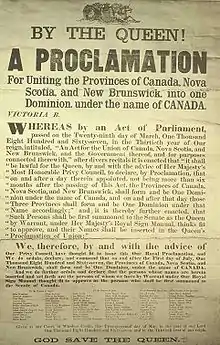
| Constitution Act, 1867 |
|---|
| Part of the Constitution of Canada |
| PREAMBLE |
| I. PRELIMINARY |
| 1, 2 |
| II. UNION |
| 3, 4, 5, 6, 7, 8 |
| III. EXECUTIVE POWER |
| 9, 10, 11, 12, 13, 14, 15, 16 |
| IV. LEGISLATIVE POWER |
| 17, 18, 19, 20 |
| The Senate |
| 21, 22, 23, 24, 25, 26, 27, 28, 29, 30, 31, 32, 33, 34, 35, 36 |
| The House of Commons |
| 37, 38, 39, 40, 41, 42, 43, 44, 45, 46, 47, 48, 49, 50, 51(1), 51(2) 51A, 52 |
| Money Votes; Royal Assent |
| 53, 54, 55, 56, 57 |
|
V. PROVINCIAL CONSTITUTIONS Executive Power |
| 58, 59, 60, 61, 62, 63, 64, 65, 66, 67, 68 |
| Legislative Power |
| 69, 70, 71, 72, 73, 74, 75, 76, 77, 78, 79, 80,81, 82, 83, 84, 85, 86, 81, 82, 83, 84, 85, 86, 87, 88, 89, 90 |
| VI. DISTRIBUTION OF LEGISLATIVE POWERS |
| 91, 92, 92A, 93, 93A, 94, 94A, 95 |
| VII. JUDICATURE |
| 96, 97, 98, 99, 100, 101 |
| VIII. REVENUES; DEBTS; ASSETS; TAXATION |
| 102, 103, 104, 105, 106, 107, 108, 109, 110, 111, 112, 113, 114, 115, 116, 117, 118, 119, 120, 121, 122, 123, 124, 125, 126 |
| IX. MISCELLANEOUS PROVISIONS |
| 127, 128, 129, 130, 131, 132, 133, 134, 135, 136, 137, 138, 139, 140, 141, 142, 143, 144 |
| X. INTERCOLONIAL RAILWAY |
| 145 |
| XI. ADMISSION OF OTHER COLONIES |
| 146, 147 |
| SCHEDULES |
|
First: Electoral Districts of Ontario Second: Electoral Districts of Quebec Third: Property of Canada Fourth: Property of Ontario and Quebec Fifth: Allegiance and Senate Qualification Sixth: Natural Resources |
| COMING INTO FORCE |
| Proclamation of the Constitution Act, 1867 |
The Constitution Act, 1867 is the constitutional statute which established Canada. Originally named the British North America Act, 1867, the Act continues to be the foundational statute for the Constitution of Canada, although it has been amended many times since 1867. It is now recognised as part of the supreme law of Canada.
Constitution Act, 1867
The Constitution Act, 1867 is part of the Constitution of Canada and thus part of the supreme law of Canada.[1] It was the product of extensive negotiations by the governments of the British North American provinces in the 1860s.[2][3] The Act sets out the constitutional framework of Canada, including the structure of the federal government and the powers of the federal government and the provinces. Originally enacted in 1867 by the British Parliament under the name the British North America Act, 1867,[4] in 1982 the Act was brought under full Canadian control through the Patriation of the Constitution, and was renamed the Constitution Act, 1867.[5] Since Patriation the Act can only be amended in Canada, under the amending formula set out in the Constitution Act, 1982.[6]
Text of section 1
Section 1 reads:
Short title
1 This Act may be cited as the Constitution Act, 1867.[7]
Section 1 is found in Part I of the Constitution Act, 1867, dealing with preliminary matters.
Amendments
Section 1 has been amended once since the Act was enacted in 1867. The original name of the Act was the British North America Act, 1867. It was changed to its current name on the Patriation of the Constitution in 1982.[5]
Purpose and interpretation
The original name, the British North America Act, 1867, reflected the colonial origins of the statute, enacted by the British Parliament in the mid-19th century, when the colonies of British North America were part of the British Empire. It was changed to Constitution Act, 1867, as part of the Patriation process, to modernise and rationalise the Constitution of Canada, without reference to British links.[8]
The short title of a statute is generally used for citing the statute, rather than the longer full title. The long title is sometimes used by a court as an aid to interpretation. Both titles are equally authoritative.[9]
Related provisions
The formal long title of the Act is: An Act for the Union of Canada, Nova Scotia, and New Brunswick, and the Government thereof; and for Purposes connected therewith.[10]
References
- Constitution Act, 1982, s. 52(1).
- Donald Creighton, The Road to Confederation (Toronto: Macmillan Publishing, 1864; reprinted ed., Oxford, Oxford University Press, 2012.)
- Christopher Moore, 1867 — How the Fathers Made a Deal (Toronto: McClelland & Stewart, 1997).
- British North America Act, 1867, 30 & 31 Victoria, c. 3 (UK).
- Constitution Act, 1982, s. 52, s. 53, and Schedule, Item 1.
- Constitution Act, 1982, Part V.
- Constitution Act, 1867, s. 1.
- Peter W. Hogg and Wade K. Wright, Constitutional Law of Canada, 5th ed., Supplemented (Toronto: Reuters Thomson, 2021 update), para. 1:3.
- Ruth Sullivan, Sullivan on the Construction of Statutes, 6th ed. (Markham: LexisNexis, 2014), paras. 14.14 to 14.21.
- Constitution Act, 1867.