International sanctions during the Russian invasion of Ukraine
Following Russia's invasion of Ukraine beginning on 24 February 2022, the United States, the European Union,[1] and other Western countries[2] introduced or significantly expanded sanctions covering Russian President Vladimir Putin and other government members,[3] and banned "selected Russian banks" from using the SWIFT international payments system,[4] triggering the 2022 Russian financial crisis and a massive international boycott of Russia and Belarus, which supports the invasion.
Background and history of sanctions and ramifications
History of sanctions
Western countries and others imposed sanctions on Russia after it recognised the independence of its allied territories, the Donetsk and Luhansk People's Republics, on 21 February 2022 in a speech by Vladimir Putin. With the commencement of attacks on 24 February 2022, a large number of other countries began applying sanctions with the aim of devastating the Russian economy.[5] The sanctions were wide-ranging, targeting individuals, banks, businesses, monetary exchanges, bank transfers, exports, and imports.[6][7][8] The sanctions included cutting off major Russian banks from SWIFT, the global messaging network for international payments, although there would still be limited accessibility to ensure the continued ability to pay for gas shipments.[9] Sanctions also included asset freezes on the Russian Central Bank, which holds $630 billion in foreign-exchange reserves,[10] to prevent it from offsetting the impact of sanctions[11][12][13] By 1 March, the total amount of Russian assets frozen by sanctions amounted to $1 trillion.[14]
Major multinational companies including Apple, IKEA, ExxonMobil, and General Motors, have individually decided to apply sanctions to Russia.[15][16] Ukrainian along with U.S. and EU governments have explicitly urged the global private sector to help uphold sanctions, and the EU, UK and Australia have also called on global digital platforms to remove Russian-based web sites.[15] Some multinational companies have disengaged from Russia to comply with sanctions and trade restrictions imposed by home states, but also on their own accord, beyond what was required by law, to avoid the economic and reputational risks associated with maintaining commercial ties with Russia.[15][16]
Several countries that are historically neutral, such as Switzerland and Singapore,[17][18] have agreed to partial sanctions.[19][20] Some countries also applied sanctions to Belarusian organisations and individuals, such as President Alexander Lukashenko, because of Belarus' involvement in the invasion.[21]
In response to the invasion, Germany's chancellor, Olaf Scholz, suspended the Nord Stream 2 pipeline and announced a new policy of energy independence from Russia. In addition, Germany provided arms shipments to Ukraine, the first time that it provided arms to a country at war since the end of World War II. Germany also increased defence expenditures by approximately $100 billion, by some estimates making it the third largest military spender in the world.[22] German industry shifted from reliance on Russian natural gas to producing more energy with renewable sources, importing gas and more coal to provide power and heating while new power generation facilities could be built.[23]
Upon his arrival for the NATO extraordinary summit in Brussels on 24 March, U.S. President Joe Biden indicated that further economic sanctions would be placed against Russia, including restrictions on the Russian Central Bank's use of gold in transactions and a new round of sanctions that targeted defense companies, the head of Russia's largest bank, and more than 300 members of the Russian State Duma.[24]
On 27 February 2022, Putin responded to the sanctions, and to what he called "aggressive statements" by Western governments, by ordering the country's "deterrence forces"—generally understood to include its nuclear forces—to be put on a "special regime of combat duty". This novel term provoked some confusion as to what exactly was changing, but US officials declared it generally "escalatory".[25] Following sanctions and criticisms of their relations with Russian business, a boycott movement began and many companies and organisations chose to exit Russian or Belarusian markets voluntarily.[26] The boycotts impacted many consumer goods, entertainment, education, technology, and sporting organisations.[27]
The US instituted export controls, a novel sanction focused on restricting Russian access to high-tech components, both hardware and software, made with any parts or intellectual property from the US. The sanction required that any person or company that wanted to sell technology, semiconductors, encryption software, lasers, or sensors to Russia request a license, which by default was denied. The enforcement mechanism involved sanctions against the person or company, with the sanctions focused on the shipbuilding, aerospace, and defence industries.[28]
During a speech at the UN General Assembly in New York City on 20 September 2022, French president Emmanuel Macron asked, "who here can defend the idea that the invasion of Ukraine justifies no sanctions?" He purported neutral states to be "indifferent" towards the conflict.[29]
On 9 December 2022, Canada imposed new sanctions on Russia, alleging human rights violations. The decision includes sanctions against 33 current or former senior Russian officials and six entities involved in alleged "systematic human rights violations" against Russian citizens who protested against Russia's invasion of Ukraine.[30]
On 16 December 2022, The EU introduced a ninth package of sanctions against the Russian economy. A spokesperson for the Belgian government said, "It is becoming increasingly difficult to impose sanctions that hit Russia hard enough, without excessive collateral damage to the EU."[31]
Sanctions
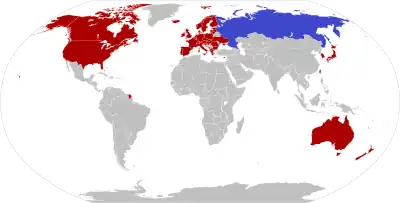
Countries on Russia's "Unfriendly Countries List". Countries and territories on the list have imposed or joined sanctions against Russia.[32]
Western countries and others began imposing limited sanctions on Russia when it recognised the independence of self-determined Donbass republics. With the commencement of attacks on 24 February, a large number of other countries began applying sanctions with the aim of devastating the Russian economy. The sanctions were wide-ranging, targeting individuals, banks, businesses, monetary exchanges, bank transfers, exports, and imports.[1][2][33]
After Russia invaded Ukraine on 24 February 2022, two governments that had not previously taken part in sanctions, namely South Korea[34] and non-UN member state Taiwan,[35] engaged in sanctions against Russia. On 28 February 2022, Singapore announced that it will impose banking sanctions against Russia for Ukraine invasion, thus making them the first country in Southeast Asia to impose sanctions upon Russia.[36]
The sanctions also included materials that could be used for weapons against Ukraine, as well as electronics, technology devices and other related equipment, which were listed in a detailed statement on 5 March.[37][38]
On 25 February and 1 March 2022, Serbia, Mexico and Brazil announced that they would not be participating in any economic sanctions against Russia.[39][40][41][42]
On 28 February 2022, the Central Bank of Russia was blocked from accessing more than $400 billion in foreign-exchange reserves held abroad[43][44] and the EU imposed sanctions on several Russian oligarchs and politicians.[45] On the same day US Foreign Assets Control (OFAC) prohibited United States persons from engaging in transactions with Central Bank of Russia, Russian Direct Investment Fund (including its predecessor, JSC RDIF, sanctioned previously), the Russian Venture Company, and Kirill Dmitriev, an ally of Vladimir Putin, personally.[46][47][48]
Sergei Aleksashenko, the former Russian deputy finance minister, said: "This is a kind of financial nuclear bomb that is falling on Russia."[49] On 1 March 2022, the French finance minister Bruno Le Maire said the total amount of Russian assets being frozen by sanctions amounted to $1 trillion.[50]
Fossil fuels and other commodities
On 28 February 2022, Canada banned imports of Russian crude oil.[51][52] On 8 June, Canada banned services to the Russian oil, mining, gas, and chemical industries.[53]
On 8 March 2022, US President Joe Biden ordered a ban on imports of oil, gas and coal from Russia to the United States.[54]
Also on 8 March 2022, Shell announced its intention to withdraw from the Russian hydrocarbons industry.[55][56]
Switzerland is a major hub for commodities trading globally. As such, about 80% of Russia's commodity trading goes through Geneva and there are an estimated 40 commodities companies linked to Russia in Zug.[57] Glencore, Gunvor, Vitol, Trafigura and Lukoil Litasco SA are oil and commodities trading firms with stakes in Rosneft and Lukoil, two major Russian oil companies.[58][59][60] Magnitogorsk Iron and Steel Works (MMK), a Russian-based company in Lugano, is also a major player in commodities/steel trading with Eastern Europe.[61]
In May 2022, the European Commission proposed a ban on oil imports from Russia.[62] The proposal was reduced to a ban on oil imports by sea to appease Hungary, whose prime minister, Viktor Orbán, has befriended Putin and which gets 60% of its oil from Russia via pipelines.[63] European imports of oil supplied by pipelines from Russia is estimated at 800,000 barrels a day and is an exception to the sanctions, with oil transit insurance bans being phased over several months. Germany and Poland have vowed to end pipeline deliveries.[64]
In response to the invasion of Ukraine by Russia, the European Commission and International Energy Agency presented joint plans to reduce reliance on Russian energy, reduce Russian gas imports by two thirds within a year, and completely by 2030.[65][66] In April 2022, European Commission President Ursula von der Leyen said "the era of Russian fossil fuels in Europe will come to an end".[67] On 18 May 2022, the European Union published plans to end its reliance on Russian oil, natural gas and coal by 2027.[68]
On 2 September, the G7 group of nations agreed to cap the price of Russian oil in order to reduce Russia's ability to finance its war with Ukraine without further increasing inflation.[69] This was followed by the European Union on 6 October, when in its 8th round of sanctions agreed to price cap Russian oil imports (for Europe and third countries) with a price maximum to be set on 5 December 2022. A number of nations, including Hungary and Serbia gained major exemptions from the agreement.[70][71]
The detrimental effects on European countries from economic sanctions against Russia had been initially valued as not significant compared to the impact these measures have on the Russian economy. However after 2022, a number of economists have pointed out that Eastern European countries with more intense economic relations with Russia (and Ukraine) before the conflict, would experience more disruptions to their economies. These 'asymmetric effects' might be considerable, particularly for smaller countries with domestic production, as these international sanctions not only affected the energy industry but also agriculture and manufacturing.[72] After the onset of the armed conflict in 2022, energy prices had skyrocketed, contributing to the 2021/2022 energy crisis. While those energy prices in 2023 had fallen again and shortages, particularly for LNG had eased, other factors came into play, such as the serious disruption of grain exports through the Black Sea corridor, thus causing a glut of grain in Eastern Europe, depressing prices seriously and endangering the livelihood of local farmers in Poland, Hungary as well as Bulgaria.[73]
Banking
In a 22 February 2022 speech,[74] US president Joe Biden announced restrictions against four Russian banks, including V.E.B., as well as on corrupt billionaires close to Putin.[75][76] UK prime minister Boris Johnson announced that all major Russian banks would have their assets frozen and be excluded from the UK financial system, and that some export licences to Russia would be suspended.[77] He also introduced a deposit limit for Russian citizens in UK bank accounts, and froze the assets of over 100 additional individuals and entities.[78]
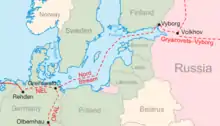
Days later, and after substantial negotiation between European nations, an agreement was made to expel many Russian banks from the SWIFT international banking network.[9]
On 26 February, two Chinese state banks—the Industrial and Commercial Bank of China, which is the largest bank in the world, and the Bank of China, which is the country's biggest currency trader—were limiting financing to purchase Russian raw materials, which was limiting Russian access to foreign currency.[80] On 28 February, Switzerland froze a number of Russian assets and joined EU sanctions. According to Ignazio Cassis, the president of the Swiss Confederation, the decision was unprecedented but consistent with Swiss neutrality.[81] The same day, Monaco adopted economic sanctions and procedures for freezing funds identical to those taken by most European states.[82] Singapore became the first Southeast Asian country to impose sanctions on Russia by restricting banks and transactions linked to Russia;[83] the move was described by the South China Morning Post as being "almost unprecedented".[84] South Korea announced it would participate in the SWIFT ban against Russia, as well as announcing an export ban on strategic materials covered by the "Big 4" treaties to which Korea belongs—the Nuclear Suppliers Group, the Wassenaar Arrangement, the Australia Group, and the Missile Technology Control Regime; in addition, 57 non-strategic materials, including semiconductors, IT equipment, sensors, lasers, maritime equipment, and aerospace equipment, were planned to be included in the export ban "soon".[85]
On 28 February, Japan announced that its central bank would join sanctions by limiting transactions with Russia's central bank, and would impose sanctions on Belarusian organisations and individuals, including President Aleksandr Lukashenko, because of Belarus' "evident involvement in the invasion" of Ukraine.[86]
Sanctions against Russia already had a significant impact on global banks. Since the invasion in 2022, the value of EU imports from Russia fell by half to about 10 billion euros ($10.85bn) in December 2022. As a result, particularly European banks experienced a serious downturn that could be felt worldwide. As Russia slashed pipeline deliveries to Europe since the invasion, balance books of European financial entities were also affected. As other commodities imported from Russia, were also the target of sanctions, including diamonds, gold, and potash fertilizers, the impact of sanctions was again magnified. Additionally other imports from Russia that are subject to secondary sanctions did already decline before 2023, such as fuel for nuclear plants, before direct measures were implemented. According to the American Bankers Association, sanctions against Russia had increased operational risks for lenders worldwide, and will require additional changes to lower financial risks, according to the source.[87][88][89]
EU sanctions
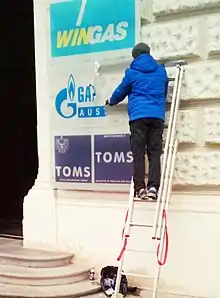
On the morning of 24 February 2022, Ursula von der Leyen, the president of the European Commission, announced "massive" EU sanctions to be adopted by the union. The sanctions targeted technological transfers, Russian banks, and Russian assets.[90] Josep Borrell, the High Representative of the Union for Foreign Affairs and Security Policy, stated that Russia would face "unprecedented isolation" as the EU would impose the "harshest package of sanctions [which the union has] ever implemented". He also said that "these are among the darkest hours of Europe since the Second World War".[91] President of the European Parliament Roberta Metsola called for "immediate, quick, solid and swift action" and convened an extraordinary session of Parliament for 1 March.[92][93]
Since February 2022, the European Union has sanctioned exports to the Russian Federation at a total value of €43.9 billion and imports to the EU worth €91.2 billion, including financial and legal services.[94]
European impoundment of yachts
A 5 April 2022 article by Insider claims the total cost of yachts impounded throughout Europe to be over $2 billion. This amount includes the motoryacht Tango, seized pursuant to United States sanctions with Spanish assistance.[95]
France
On 26 February, the French Navy intercepted Russian cargo ship Baltic Leader in the English Channel. The ship was suspected of belonging to a company targeted by the sanctions. The ship was escorted to the port of Boulogne-sur-Mer and was being investigated.[96]
On 2 March 2022, French customs officials seized the yacht Amore Vero at a shipyard in La Ciotat. The Amore Vero is believed to be owned by the sanctioned oligarch Igor Sechin.[97]
Two yachts belonging to Alexei Kuzmichev of Alfa Bank were seized by France on 24 March.[98]
Germany
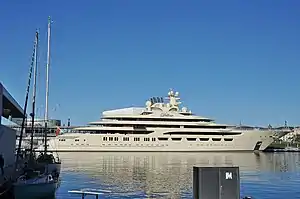
On 2 March 2022, German authorities immobilized the Dilbar, owned by Alisher Usmanov.[99][100] She is reported to have cost $800 million, employ 84 full-time crew members, and contain the largest indoor swimming pool installed on a superyacht at 180 cubic metres.[101]
Italy
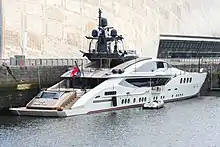
On 4 March 2022, Italian police impounded the yacht Lady M. Authorities believe the ship is owned by Alexei Mordashov.[102] The same day, Italian police seized the yacht of Gennady Timchenko, the Lena, in the port city of Sanremo.[103] The yacht was also placed on a United States sanctions list.[104] On 12 March 2022, Italian authorities in the port of Trieste seized the sailing yacht A, known to be owned by Andrey Melnichenko. A spokesperson for Melnichenko vowed to contest the seizure.[105]
Lithuania
On 20 April 2023, Lithuanian parliament Seimas finalised and approved sanctions to all Russian and Belarusian citizens as a response to Russian invasion of Ukraine. From 1 May 2023, citizens of both countries are illegible to obtain Lithuanian visas, e-resident status or exchange Ukrainian hryvnia. In addition, Russian citizens are also illegible to submit request for permanent stay in Lithuania or purchase property within Lithuanian teritory.[106]
Spain
In March 2022, the Spanish Ministry of Development (known by its acronym "MITMA") detained three yachts pending investigation into whether their true owners are individuals sanctioned by the European Union. The Valerie is detained in the Port of Barcelona; Lady Anastasia in Port Adriano in Calvià, Mallorca; and the Crescent in the Port of Tarragona.[107][108][109]
United Kingdom
On 29 March 2022, Grant Shapps, the British secretary of state for transport, announced the National Crime Agency's seizure of the PHI. The yacht was docked at Canary Wharf and was about to leave.[110][111]
Netherlands
On 6 April 2022, Dutch Minister of Foreign Affairs Wopke Hoekstra sent a letter on the subject of sanctions addressed to the House of Representatives. In it, he reported that while no Russian superyachts were at anchor in the Netherlands, twelve yachts under construction across five shipyards were immobilized to ascertain ownership, including possible beneficial ownership.[112]
Aviation
The EU sanctions introduced on 25 February included a ban on the sale of aircraft and spare parts,[113] and also required lessors to terminate the leases on aircraft placed with Russian airlines by the end of March.[114]
Services and spare parts
On 2 March 2022, Airbus and Boeing both suspended maintenance support for Russian airlines.[115] On 11 March, China blocked the supply of aircraft parts to Russia.[116] Business jet manufacturer Bombardier Aviation announced that, in addition to suspending after-sales service activities, it had cancelled all outstanding orders placed by Russian individuals or companies.[117] As of April 2022, spare part and repair difficulties for the Safran/Saturn SaM146 engines used on the Sukhoi Superjet 100 were expected to force Russian airlines to ground the type.[118] The lack of approved spare parts has also affected foreign aircraft flying into Russian airports.[119]
In June 2022, the Russian government advised its airlines to use some aircraft for parts.[120] That same month, Patrick Ky, executive director of the European Aviation Safety Agency (EASA), expressed concern about the safety of Western-made aircraft flying in Russia without proper access to spare parts or maintenance. He highlighted that risks increase over time and cited reports that Russia will be forced to cannibalise aircraft.[121] In August 2022, Reuters reported confirmation from "four industry sources" that Russia had stripped parts from Airbus A320s and A350s, a Boeing 737 and a Sukhoi Superjet in order to perform maintenance on other aircraft. Around 15% of Aeroflot's fleet appeared to be grounded.[120]
Leased aircraft
On 10 March 2022, Russia passed legislation outlining conditions to impede the return of leased aircraft to foreign lessors, including the need for approval from a government committee and payment of settlements in Roubles.[122] Many aircraft operated by Russian airlines had been registered with the Bermuda registry, which suspended airworthiness approvals on 14 March.[123] The same day, Russia implemented a law allowing aircraft operated by Russian airlines to be re-registered with the Russian registry, effectively confiscating them from their overseas owners. Some 515 commercial aircraft, valued at approximately $10 billion, were leased by Russian airlines from foreign lessors prior to the sanctions.[124] Lessors moved swiftly to repossess those few aircraft "stranded" outside Russia[125] and reassigned some new aircraft due to be placed with Russian airlines, particularly Boeing 737 MAX that are now unlikely ever to be recertified by Russia.[126] By 22 March, 78 foreign-owned aircraft had been reclaimed, amid speculation that some Russian airlines were cooperating with lessors in order to avoid jeopardising future relations.[127] Rossiya Airlines, a subsidiary of Aeroflot, had reregistered all its fleet with the Russian registry by 29 March.[128]
By 30 March, Irish lessor AerCap had repossessed 22 of the 135 aircraft it had leased to Russian airlines, and 3 of the 14 engines on lease. It filed insurance claims totalling $3.5 billion for the remaining aircraft, many of which were "now being flown illegally by [its] former airline customers".[129] Singapore-based lessor BOC Aviation had 18 aircraft worth $935 million on lease to Russian companies; it repossessed from Hong Kong one Boeing 747-8F leased to AirBridgeCargo but two other freighters were flown back to Russia contrary to explicit instructions, despite their insurance coverage and airworthiness certificates having been revoked.[130]
On 31 March, Russian Deputy Prime Minister Yury Borisov declared that all leased aircraft still in Russia had been re-registered and would remain in Russia, a total of over 400 aircraft.[131] However, re-registration of aircraft without their owners' consent is a breach of ICAO standards. These aircraft may be confiscated and repossessed upon landing in any airport outside of Russia.[132]
Aeroflot gradually resumed international flights to "friendly" countries: to Kyrgyzstan from 14 March, Azerbaijan on 21 March, Armenia from 22 March, Iran from 2 April, Sri Lanka from 8 April,[133] and Turkey and India from 6 May.[134] On 2 June, an Aeroflot A330 belonging to an Irish lessor was temporarily impounded by a commercial court in Sri Lanka, though the aircraft was subsequently allowed to return to Russia on 5 June.[135]
On 13 May, Aeroflot announced that it had purchased 8 A330s from foreign leasing companies, under an exemption that allows the execution of a lease solely to obtain repayments.[136] On 1 June, it emerged that five Russian airlines had kept a total of 31 aircraft outside Russia and returned them to lessors. Other airlines including Aeroflot have deposited money in special Rouble accounts to enable lessors to claim the amounts once sanctions are lifted.[137] In August, S7 Airlines was given special permission to "export" its two 737 MAX aircraft to Turkey in order to return them to their lessor.[138]
Airspace
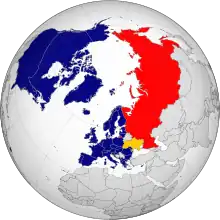
On 24 February 2022, Ukrainian airspace was closed to civilian aircraft a few hours before the Russian invasion started, on the basis of a notification from the Russian Ministry of Defence. The European regulator EASA issued a Conflict Zone Information Bulletin (CZIB) warning that civilian aircraft could be misidentified or even directly targeted.[139]
On 25 February, the UK announced the closure of its airspace to Russian airlines.[140] On 27 February, the EU and Canada closed their airspace to all Russian aircraft, including both commercial and private aircraft.[141] Russia issued a reciprocal ban, forcing many airlines to reroute or cancel flights to Asian destinations.[142] The US issued a similar ban on 1 March.[143] On 8 March, Aeroflot suspended all its remaining flights to international destinations (except for Minsk, Belarus) due to airspace restrictions[144] and to counter the "risk" of aircraft being repossessed by lessors.[145] On 9 March, to avoid Russian airspace, Finnair started routing its flights to Asia over the North Pole, the first time a polar route has been used for commercial flights in nearly 30 years.[146] An analysis of routes between Europe and Asia showed increased travel distances of between 1200 and 4000 km; the frequency of flights to some destinations has been reduced and other routes have been dropped.[147]
By 29 March 2022, the following countries and territories had completely closed their airspace to all Russian airlines and Russian-registered private jets:[148][149][150][151]
 Albania
 Anguilla[152]
 Aruba[153]
 Bermuda[154]
 Bonaire[155]
 British Virgin Islands[156]
.svg.png.webp) Canada
Canada Cayman Islands[157]
 Faroe Islands[158]
 Gibraltar[159]
 Greenland[160]
 Iceland
 Kosovo
 Moldova
 Montenegro
 Montserrat[161]
 North Macedonia
 Norway
 Saba[162]
 Saint Helena[163]
 Sint Eustatius[164]
 Sint Maarten[165]
.svg.png.webp) Switzerland (with exceptions for diplomats and United Nations representatives)[166]
Switzerland (with exceptions for diplomats and United Nations representatives)[166] Turks and Caicos Islands[167]
 Ukraine (since 2015)
 United Kingdom
 United States
 European Union (EU27)
.svg.png.webp)







In addition to airspace closure under sanctions, on 11 April EASA blacklisted 21 Russian airlines on safety grounds, given that aircraft are being operated without airworthiness certificates, in breach of the Chicago Convention and international safety standards.[168] EASA clarified that the Russian air transport regulator, Rosaviatsia, had failed to provide evidence that it has the capacity to perform the oversight activities required to ensure air safety.[169] The US Federal Aviation Administration also downgraded Russia's safety rating, meaning that no new services to the US and no codeshares with US carriers are authorised.[170]
In May 2022, the UK announced that Russian airlines would be prohibited from selling their landing slots at UK airports, valued at approximately £50 million.[171] The slots were subsequently reallocated to other airlines.[172]
At the end of May 2022, the Civil Aviation Administration of China (CAAC) closed its airspace to aircraft that have been re-registered with the Russian registry in breach of ICAO regulations and for which the airlines are thus unable to provide proper documentation.[173]
Russian aircraft manufacturing industry
EASA revoked the type certificates of the Sukhoi Superjet 100, Tupolev Tu-204 and four other Russian aircraft types on 14 March, as well as approvals of maintenance organisations and third-country authorisations for Russian airlines. EASA also suspended all work on new certification applications, including the Irkut MC-21 airliner.[174] Due to the need to source all aircraft components domestically, notably the Pratt & Whitney PW1400G engines which will be replaced by Russian-built Aviadvigatel PD-14 units, production of the MC-21 is expected to be delayed by 2 years. In the meantime, production of older and less fuel-efficient Russian-built aircraft such as the Tupolev Tu-214 and Ilyushin Il-96-400 will be stepped up, and a fuel subsidy introduced.[175] The Sino-Russian CR929 wide-body aircraft programme, which was already in difficulty due to the diverging expectations of the two parties, is also expected to suffer significant delays or even cancellation.[176]
On 29 June, the US government expanded its sanctions to cover United Aircraft Corporation (UAC) (the parent company of Irkut, United Engine, Tupolev, Ilyushin and others), with an exemption allowing UAC to export parts and services for civil aircraft not registered in Russia if necessary for aviation safety.[177]
Aviation industry organisations and alliances
On 15 March, Aeroflot CEO Mikhail Poluboyarinov, who is targeted with EU sanctions, was removed from the IATA board of governors.[178]
In April, the two Russian airlines that were members of global airline alliances both saw their memberships suspended: S7 Airlines from Oneworld and Aeroflot from SkyTeam.[179]
U.S. "freeze and seize" policy
The main United States sanctions law, IEEPA, blocks the designated person or entity's assets, and also prohibits any United States person from transacting business with the designated person or entity. Specifically, 50 U.S.C. § 1705 criminalizes activities that "violate, attempt to violate, conspire to violate, or cause a violation of any license, order, regulation, or prohibition," and allows for fines up to $1,000,000, imprisonment up to 20 years, or both. Additionally, United States asset forfeiture laws allow for the seizure of assets considered to be the proceeds of criminal activity.
On 3 February 2022, John "Jack" Hanick was arrested in London for violating the sanctions against Konstantin Malofeev, owner of Tsargrad TV. Malofeev is targeted with sanctions by the European Union and United States for material and financial support to Donbass separatists.[180][181][182][183][184][185][lower-alpha 1] Hanick was the first person criminally indicted for violating United States sanctions during the War in Ukraine.[187]
According to court records, Hanick has been under sealed indictment in the United States District Court for the Southern District of New York since November 2021. The indictment was unsealed 3 March 2022. Hanick awaits extradition from the United Kingdom to the United States.[188][189]
In the 1 March 2022 State of the Union Address, American President Joe Biden announced an effort to target the wealth of Russian oligarchs.
Tonight, I say to the Russian oligarchs and the corrupt leaders who've bilked billions of dollars off this violent regime: No more.
The United States — I mean it. The United States Department of Justice is assembling a dedicated task force to go after the crimes of the Russian oligarchs.
We're joining with European Allies to find and seize their yachts, their luxury apartments, their private jets. We're coming for your ill-begotten gains.[190]
On 2 March 2022, U.S. Attorney General Merrick B. Garland announced the formation of Task Force KleptoCapture, an inter-agency effort.[191]
On 11 March 2022, United States President Joseph R. Biden signed Executive Order 14068, "Prohibiting Certain Imports, Exports, and New Investment With Respect to Continued Russian Federation Aggression," an order of economic sanctions under the United States International Emergency Economic Powers Act against several oligarchs. The order targeted two properties of Viktor Vekselberg worth an estimated $180 million: an Airbus A319-115 jet and the motoryacht Tango.[192] Estimates of the value of the Tango range from $90 million (U.S. Department of Justice estimate) to $120 million (from the website Superyachtfan.com).
On 4 April 2022, the yacht was seized by Civil Guard of Spain and U.S. federal agents in Mallorca. A United States Department of Justice press release states that the seizure of the Tango was by request of Task Force KleptoCapture, an interagency task force operated through the U.S. Deputy Attorney General.[193][194][195]
The matter is pending in the United States District Court for the District of Columbia. The affidavit for the seizure warrant states that the yacht is seized on probable cause to suspect violations of 18 U.S.C. § 1349 (conspiracy to commit bank fraud), 50 U.S.C. § 1705 (International Emergency Economic Powers Act), and 18 U.S.C. § 1956 (money laundering), and as authorized by American statutes on civil and criminal asset forfeiture.[196]
Other entities
On 9 March 2022, the New Zealand Parliament passed the Russia Sanctions Act 2022, which allows for sanctions to be placed on individuals connected to the 2022 Russian invasion of Ukraine and targets their assets including funds, ships, and planes. New Zealand also created a blacklist targeting senior Russian officials and oligarchs.[197][198] On 6 April, New Zealand also imposed a 35% tariff on Russian products while restricting industrial exports to Russia.[199][200]
The Bahamas, Antigua and Barbuda and Saint Kitts and Nevis also joined the list of imposing sanctions on Russia.[201][202][203]
On 2 May, Finnish consortium Fennovoima announced that it had terminated its contract with Russia's state-owned nuclear power supplier Rosatom for the delivery of a planned nuclear power plant in Finland.[204]
Shifting of safe havens and sanctions evasion
Switzerland
Switzerland follows the EU sanctions and in response was put on the list of "unfriendly nations" by Russia.[205] According to the Swiss Embassy in Moscow, Switzerland has long been "the most important destination worldwide for rich Russians to manage their wealth".[206] The Bank for International Settlements estimates that Russian nationals have only $11 billion deposited in Swiss bank accounts, though other estimates are much higher: for example the Neue Zürcher Zeitung estimates the amount deposited to be CHF 150 billion[207] and the Swiss Bankers Association states even between CHF 150 and 200 billion (between US$160 and 214 billion).[208] As of July 2022, CHF 6.7 billion had been frozen by the Swiss authorities, according to Swiss authorities more than any other country has.[209][210][211] The sanctions target at least 1156 people and 98 companies which were identified by the EU.[211]
Leading Russian opposition figures, including British financier Bill Browder, have criticised Switzerland by saying the country is not doing nearly enough, while granting Russia too many loopholes in commodities trading, real estate investing or banking sector.[212][213][214] According to U.S. Ambassador to Switzerland Scott Miller in 2023, "Switzerland could block an additional CHF 50-100 billion” of the Russian assets.[215]
In May 2022, the Helsinki Commission of the U.S. Congress accused Switzerland to be "a leading enabler of Russian dictator Vladimir Putin and his cronies" – a claim that was strongly rejected by the Swiss government stating that "the country implements all sanctions that were decided by the EU and the Federal Council".[216] The Federal Council of Switzerland called the allegations of the Helsinki Commission "politically unacceptable" and the President of the Swiss Confederation complained in a phone call with the US secretary of state Antony Blinken about the accusations.[217][218] Switzerland hosted an international conference in Lugano on 5 July 2022 to finance the rebuilding of war-torn Ukraine. In August 2022, Switzerland adopted new EU sanctions to ban all Russian gold imports. At the same time, new exceptions with respect to financial transactions related to agricultural products and oil supplies to third countries were also made public.[219][220][221] In September, Switzerland stopped sharing tax information with Russia; Russia therefore no longer receives information about financial accounts Russian citizens have in Switzerland.[222]
United Arab Emirates
Lured by the United Arab Emirates' flexible visa program, many wealthy Russians moved their money to the UAE. Property purchases in Dubai by Russians surged by 67% in the first three months of 2022. Around 200,000 Russians were estimated to have left the country in the first 10 days of the war.[223] Investigations revealed that private jets and yachts belonging to sanctioned Russian oligarchs and billionaires were found in places like Dubai and the Maldives. A number of private jets belonging to sanctioned Russians were also tracked flying back and forth between Moscow and Tel Aviv, and between Russia and Dubai.[224][225] Some Russians also began to utilize the UAE's "golden visa" program, which could allow these oligarchs to live, work, and study in the UAE with full ownership of their business.[226][227]
In May 2022, European Parliament members suggested that the UAE should be blacklisted for allowing sanctioned Russian oligarchs and other officials to invest in properties and businesses in Dubai.[228]
A Russian oligarch, Andrey Melnichenko was sanctioned by the European Union in March 2022, after claims that he attended a meeting with Putin on the day of the invasion. Following the sanctions, Italian authorities seized Melnichenko's $600 million Sailing Yacht A. Another yacht belonging to him, the $300 million Motor Yacht A was identified parked in a port in Ras al-Khaimah in the UAE.[229] A $350 million Boeing 787 Dreamliner private jet belonging to Roman Abramovich was also grounded in Dubai. The US Department of Justice has an order from a US federal judge to seize the jet.[230] Politicians and campaigners, including Danish MEP Kira Marie Peter-Hansen and campaigner Bill Browder, called for the UAE to be blacklisted for allowing the flow of "dirty money" and acting as a refuge for sanctioned Russians.[231][232]
On 23 June 2022, the Madame Gu superyacht, owned by sanctioned billionaire Andrey Skoch, was reported to have been docked at Port Rashid in Dubai since 25 March. It was designated as sanctioned property by the US.[233] In June 2022, Russia's wealthiest oligarch, Vladimir Potanin moved his $300 million superyacht, Nirvana, to Dubai. Potanin was not sanctioned at the time, and the move to shift the luxury superyacht to Dubai's Port Rashid was a precautionary measure.[234][235]
The United Arab Emirates defends its stance on sanctions targeting Russian individuals by stating that it remains neutral and has not imposed sanctions.[236] The UAE stated that its state policy complies with the international rights norms, stipulated by the United Nations Organization, which has not imposed any sanctions.[237]
In 15 March 2023, the EU and Joe Biden officials shared a concern that Russia continued to access confidential foreign chips and technology through countries like the UAE, China, Iran, Turkey and Kazakhstan, which were acting as intermediaries. The UAE and China, which didn’t have any sanctions on Russia, were also helping Russia to access the US technology and equipment. From Italy, the US also wanted to extradite a Russian national, Artem Uss, who was one of the major supply chain mediators supplying American technology to Russia.[238] But Artem Uss escaped from his house arrest in Milan mid April 2023 and clandestinely returned to Russia.[239]
By April 2023, the shifting to safe havens was also involving large gold sales that are now conducted through the UAE first, before reaching other destinations. Due to the flexibility of gold transactions, and the ability to re-issue gold certificates as well as gold bullions, it is practically impossible to control the flow of gold from sanctioned entities. Even when gold-rich countries, such as Switzerland had adhered to EU sanctions, and no longer imported gold directly from Russia, the trade with such commodities among others, actually increased for 2022 and early 2023. Furthermore, both China and Russia had increased their gold reserves considerably, even before the onset of the hostilities between Russia and Ukraine, driving up the gold price. As the gold trade became less transparent due to the sanctions imposed on Russia, economic effects of such transactions are now much more difficult to predict.[240][241]
Effects on Russian economy
2022
In April 2022, Russia supplied 45% of EU's gas imports, earning $900 million a day.[242] In the first two months after the invasion of Ukraine, Russia earned $66.5 billion from fossil fuel exports, and the EU accounted for 71% of that trade.[243]
The Russian rouble reached its highest evaluation against the US Dollar and Euro since 2015. However, this valuation has been referred to as a falsified "Potemkin rate" because sanctions prevent trading with foreign accounts or currencies.[244] In May 2022, the Russian Central Bank last slashed its key rate by 300 basis points to 11% in order to stimulate local investments.[245] The federal trade surplus was increased due to high prices for Russian commodity exports and a rapid fall in imports. On 27 May 2022, Russian Finance Minister Anton Siluanov stated that extra revenues from the sale of natural gas in the amount of €13.7 billion will be used to increase pension funds for retired individuals and families with children, as well for "special operations" in the Ukraine.[246] Russia has also increased energy exports to China and India to make up for decreased revenues in Europe. Bloomberg reported that in the first half of 2022, Russia pocketed an extra $24 billion from selling energy to both nations.[247]
According to the IMF in its 11 April 2022 country report on Russia, the Russian economy is projected to see a -8.5% decrease in its real GDP in 2022, with inflation of 21.3% in that same year.[248] Despite projected contractions in some economic sectors, Russia has so far managed to avoid defaulting on its foreign currency debt. Russian inflation came in at a two-decade high of 17.8% year-on-year in April, up from 16.7% in March, but inflation on basic commodities such as food and fuel were modest. Consumer price growth slowed sharply from 7.6% in March to 1.6% in April, in line with some Western countries.[249]
Citizens of the Russian Federation had faced surging inflation and unemployment, expensive credit, capital controls, restricted travel, and shortages of goods. Analysts have identified similarities with conditions in the decade following the collapse of the Soviet Union in 1991.[250][251] Russia's Kaliningrad exclave faces ever-increasing isolation.[252] A source close to the Kremlin told the Russian-language independent news website Meduza that "There's probably almost nobody who's happy with Putin. Businesspeople and many cabinet members are unhappy that the president started this war without thinking through the scale of the sanctions. Normal life under these sanctions is impossible."[253] But, Vladimir Putin said that who driving by Mercedes-Benz S-Class 600 and consume luxury products will continue to do it in future.[254][255]
On 27 June 2022, Bloomberg reported that Russia is poised to default on its foreign debt (eurobonds), for the first time since 1918 after the Bolshevik revolution. According to the source, the country missed a debt payment due to sanctions on Russian banks. Finance Minister Siluanov dismissed the possible default status as a "farce", since Russia has plenty of funds to repay the debt. Associated Press reported that the official default on Russian's foreign debt would take time to be confirmed. Financial analysts described Russia's situation as unique, since it has extensive amounts of cash to fulfill its debt obligations.[256][257]
In late July 2022, the IMF upgraded Russia's GDP estimate by 2.5%, but some economists see a long-term problem for the Russian economy, and explain its resilience only by a short-term increase of energy prices. A Yale study projects a catastrophic outlook for Russian businesses if Western countries are able to keep up the sanctions against Russia's petrochemical industry. So far, Russia was able to leverage its economic power by cutting gas supplies to Europe, and play up its agricultural might as the largest wheat exporter globally. Western economists see long-lasting costs to the Russian economy from the exit of large foreign firms and brain drain, while Russia claims it has replaced those entities with domestic investments. Long term, Russia's economy will depend on the price development of fossil fuel energy, and Russia's continued economic alliances with countries that do not impose sanctions, including China, the Middle East, India, as well as nations in Africa and South America.[258][259][260]
Russia's gross domestic product contracted 4% in the second quarter of 2022, revised from 6.5%, with a 15.3% drop in wholesale trade, and a 9.8% contraction in retail trade. Despite the ongoing sanctions, 47 of the world's biggest 200 companies still have not left Russia, particularly energy companies remain invested there. U.K. energy giant Shell and Japanese trading firms Mitsui and Mitsubishi hold double-digit stakes in the Sakhalin-2 oil and natural gas project. On 1 July 2022, Putin signed a decree to allow the government to seize the Sakhalin-2 oil and natural gas project but further attempts to formally nationalize the assets of international firms were paused when the bill did not make it through the State Duma before the 2022 summer recess. According to Western analysts, remaining companies have experienced expropriation and nationalization pressures, but officially Russia has denied that it is interested in such actions. In August 2022, Russia's trade and industry minister Denis Manturov stated, "we are not interested in the nationalization of enterprises or their removal."[261][262] In October 2022, the decree was approved, allowing a Russian state-run company to seize ExxonMobil's 30% stake in the Sakhalin-1 oil and gas project, and to decide whether foreign shareholders, including Japan's SODECO, can retain their participation.[263]
Russia pumps almost as much oil as before its 2022 invasion of the Ukraine. Sales to the Middle East and Asia have made up for declining exports of gas and oil to Europe, and due to the higher price, Moscow made $20 billion monthly compared to $14.6 billion a year before (2021). Despite international sanctions, Russian energy sales have increased in value, and its exports have expanded with new financing options and payment methods for international buyers. According to the Institute of International Finance, "Russia is swimming in cash", earning $97 billion from oil and gas sales through July 2022. According to a former Russian energy executive, "there came a realization that the world needs oil, and nobody is brave enough to embargo 7.5 million barrels a day of Russian oil and oil products".[264]
According to the Former First Deputy Chairman of the Central Bank of Russia Oleg Vyugin, sanctions imposed against Moscow over the conflict in Ukraine were only 30%-40% effective as Russia has found ways to overcome restrictions. He confirmed the contraction of the Russian economy by 4% in 2022 due to sanctions, but found this has been "no catastrophe" for the Russian Federation. Russia's current account surplus – the difference in value between exports and imports – has been soaring due to declining imports, but he warned that a further embargo on Russian exports could reduce crucial revenues. He also added that the impact of US and European export controls in the technology sector will be felt with some delay.[265]
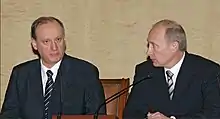
In October 2022, Russia's exports of crude to China had again surpassed Saudi Arabia's for the 3rd month. Significant increases were seen through the Eastern Siberia–Pacific Ocean oil pipeline and seaborne shipments from Russia's European and Far Eastern ports, up 7.6% from a year ago, according to Chinese customs data. Increased Russian oil exports are particularly significant during an overall decline of 9.5% crude oil imports into China due to lower economic growth.[267]
In December 2022, when the European Union implemented its oil embargo and price cap on Russian crude, economic news channels reported a drop of Russian oil exports by 54% in the first week. A number of oil companies were no longer using Russian cargoes, including Shell corporation and ExxonMobil. But Russia was already sending nearly 90% of its oil to Asia before the sanctions were implemented. Shipowners in Asia as well were reportedly less likely to transport Russian crude after the European sanctions came into force.[268] In late 2022, the Russian economy's relative resilience to Western sanctions was tested when financial sanctions seriously impacted Russia's VTB Bank, the country's No. 2 lender. VTB bank has frozen assets abroad worth around 600 billion roubles, and then purchased Otkritie FC Bank to make up for the loss (Italy's UniCredit was initially interested in a takeover). The Bank of Russia agreed to the sale for 233 billion roubles in cash and treasury bonds, increasing the share-value for Moscow-listed VTB. Dominant lender Sberbank, however, was less affected by financial sanctions and produced a quarterly profit. The central bank announced a bail-out of 555 billion roubles, and with the recent sale of Otkritie obtained a refund of 352 billion roubles.[269]
According to Russian calculations, the country's economy shrank by 2.5% in 2022, showing better dynamics than expected by Western analysts. Both Russia's current trade account balance and foreign currency reserves increased significantly due to decreased imports from Western countries. Because of the increased expenditure for the 2022 Russian invasion of Ukraine, Moscow posted a record budget deficit of USD 47.3 billion in 2022 (2.3% of GDP). Some of the reduction in trade with Western Europe was compensated by a record trade balance with China, USD 190 billion in 2022.[270] The Russian state as well as its citizens purchased a record amount of gold from Russian banks in 2022 (64 to 67 metric tons) due to tax-free profit from gold sales, and economic instability from Western sanctions. Gold, which significantly increased in value in late 2022 and early 2023, is seen as another backbone of the Russian economy. Russia attempts to create a gold-backed stablecoin to support its foreign trade in light of ongoing sanctions.[271][272]
2023
Two financial reports from late 2022 and early 2023 concluded that only 8.5% or less than one out of ten companies had divested at least one subsidiary in Russia. In comparison between economic regions, 18% of US companies with subsidiaries exited Russia, some 15% of Japanese firms and only 8.3% of EU firms have done the same. Among EU nations, Italian companies were least likely to exit from Russia. Particularly firms involved in lucrative resource extraction and agriculture remain active there, but also pharmaceutical companies, which are exempt from sanctions. Quantitatively, those companies which left Russia (a total of 120) represent only 6.5% of total profits of all the firms active there. Even companies that planned a full withdrawal had struggled to pull out their businesses swiftly and comply with sanctions or NGO demands, according to business analysts.[273][274]
Year on year, Russian car production fell 67% from 2021 to 2022. Truck production decreased 24% [275][276] A particularly drastic fall occurred in May 2022 when car production dropped 97%,[277] but rebounded after some adaptations. Car sales fell 63%[278]
In March 2023, renewed assessments on the Russian economy were made public. Former Russian Central Bank official Alexandra Prokopenko had warned that "Russia’s economy is entering a long-term regression". Western economists also expressed that Russia's resilience was only short term, and that subsequent to the oil and gas embargo by Europe in late 2022 and early 2023, the RF would enter a recessive period. Despite the dimming outlook, however, the Russian petroleum industry was able to shift its export market towards China and India but also Saudi Arabia, Turkey and Morocco. Russia's diesel exports in late winter of 2023 are heading for record despite EU sanctions, according to Bloomberg News. Shipments of diesel type fuels surged to 1.5 million barrels in the first two trimesters of March 2023, the highest volume since data was collected in 2016. The IMF predicts that Russia's economic growth would be at only 1%, down from 3.5% before 2014, when it annexed the Crimea from Ukraine. Russia's federal budget balance had hit a record deficit of 4 trillion rubles in late 2022, and economists predicted a further isolation of the Russian economy. Meanwhile later that month, Mr. Putin and Chinese PM Xi Jinping had met again also to further increase economic cooperation particularly in the area of high technology and energy. Despite Russia's present slow growth, it has increased its military output, as the production of finished metal goods increased by 7% in 2022 due to the conflict in the Ukraine.[279][280]
In early April 2023, Bloomberg News noted that Russia's seaborne crude oil exports were soaring due to the constrained pipeline deliveries to Western Europe. According to ship-tracking data, the nation's shipments surged by 1 million barrels/d to a new high of 4.13 million barrels. Data also indicates that most sales were conducted below the price cap of 60$/barrel, an indication that the price cap is somewhat effective to limit Russia's financial gains. Even the announced OPEC+ production cut, as a wider move to stabilize oil prices, has been viewed as not constraining the flow of oil further. The loss of pipeline markets increased Russia's maritime shipments by an additional 500,000 barrels/d, including record deliveries to China and India, but smaller flows to Turkey.[281] Japan also carved out an exemption for itself, buying Russian oil above the price cap, just below 70$/BBL with a volume of 748,000 barrels in the first two month of 2023. The situation for Japan has been interpreted as a gain for Russia, avoiding further isolation of its economy.[282] Later that month, economic data showed that Russia's crude oil export were back to pre-war levels with India as well as China paying above the price-cap set by Western nations.[283][284]
Effect on global food supply
Western countries have accused Russia to interfere with wheat exports from Ukraine due to armed confrontations in Odesa and other Ukrainian ports. Later the Kremlin pushed back and accused the West of imposing sanctions on the Russian economy that hinder the export of wheat from the Russian Federation. Spokesperson Dmitry Peskov referred to Russia as "a rather reliable grain exporter". During a meeting with Italian Prime Minister Mario Draghi, Putin confirmed Russia's willingness to make "a significant contribution to overcoming the food crisis through the export of grain and fertilizer" but mentioned Western sanctions as the caveat.[285][286]
The head of the African Union, Senegalese President Macky Sall, remarked that the side effects of the EU's decision to expel many Russian banks from SWIFT will hurt the ability of African countries to pay for imported food and fertilizers from Russia. French President Emmanuel Macron responded that difficulties have nothing to do with EU sanctions.[287]
On 30 June, Russia withdrew its troops from Snake Island in an avowed goodwill gesture to not obstruct U.N. attempts to open a humanitarian corridor, allowing grains to be shipped from Ukraine. Later on 16 July, major news outlets reported that Kyiv is definitely a step closer to being able to export grain through its Black Sea ports after talks with Russia, facilitated by Turkey, and the United Nations.[288] On 22 July 2022, the facilitated exports of Ukrainian grain via the Black Sea amid the ongoing war has been described as "a beacon of hope" by the UN Secretary-General António Guterres during the signing ceremony in Istanbul, Turkey.[289]
On 14 September 2022, UN Secretary-General Antonio Guterres reiterated his concerns over a constrained fertilizer supply from Russia due to the 2022 Russian invasion of Ukraine and subsequent economic sanctions. According to the source, UN diplomats held discussions to re-open the Togliatti-Odesa pipeline carrying ammonia. President Volodymyr Zelenskiy had offered such a move in exchange for the release of prisoners of war held by Russia. But TASS news agency quoted Kremlin spokesman Dmitry Peskov, who dismissed such an idea, as saying "are people and ammonia the same thing?".[290]
At the 38th meeting of the Standing Committee for Economic and Commercial Cooperation (COMCEC) of the Organization of Islamic Cooperation (OIC) in Istanbul, Erdogan remarked that over 11 million tonnes of grain had been transported through the Black Sea Grain Corridor since the successful implementation of the Black Sea Grain Initiative. He also noted that the opening of the grain corridor through the Black Sea showed that a diplomatic solution is possible in the conflict between Russia and Ukraine.[291]
In April 2023, the war in the Ukraine and financial sanctions against Russia had also disturbed global spot markets for grains. While the price of wheat and other foods in North Africa had actually increased, a glut of Ukrainian wheat in Eastern Europe had depressed local price levels there, causing a differential effect that was detrimental to the global economy. In Tunisia, inflationary pressures in particular contributed to political instability, and increased illegal immigration into Western and Southern Europe.[292][293]
See also
- 2022 Russian debt default – Credit crisis in the Eurasian country
- 2022 Russia–European Union gas dispute – Fossil fuel financing-related conflicts
- Countering America's Adversaries Through Sanctions Act – 2017 U.S. law sanctioning Iran, North Korea and Russia
- Economy of Ukraine – National economy of Ukraine
- International Emergency Economic Powers Act – United States federal law
- International sanctions during the Russo-Ukrainian War – Sanctions after 2014 invasion of Crimea
- International sanctions during apartheid
- International sanctions during the Venezuelan crisis – International sanctions during the crisis in Venezuela
- List of companies that applied sanctions during the Russo-Ukrainian War
- Magnitsky Act – 2012 United States federal law
- Russian financial crisis (2014–2016) – Period of devaluation of the Russian rouble, linked to the Crimean conflict
- Trading with the Enemy Act of 1917 – U.S. law
- United States sanctions
- Specially Designated Nationals and Blocked Persons List
- Sanctioned due to Russo-Ukrainian War
- The main database of sanctions imposed after the Russian attack on Ukraine
Notes
- Through Malofeev, Hanick is close to the pro Russia former Greek defense minister Panos Kammenos and Vladimir Putin gives carte blanche to Tsargrad TV which according to Malofeev is the Russian equivalent to Fox News.[186]
References
- Melander, Ingrid; Gabriela, Baczynska (24 February 2022). "EU targets Russian economy after 'deluded autocrat' Putin invades Ukraine". Reuters. Archived from the original on 26 February 2022. Retrieved 26 February 2022.
- "Western Countries Agree To Add Putin, Lavrov To Sanctions List". Radiofreeeurope/Radioliberty. 25 February 2022. Archived from the original on 26 February 2022. Retrieved 26 February 2022.
- Holland, Steve; Chalmers, John; Psaledakis, Daphne (26 February 2022). "U.S., allies target 'fortress Russia' with new sanctions, including SWIFT ban". Reuters. Archived from the original on 26 February 2022. Retrieved 26 February 2022.
- Collins, Kaitlan; Mattingly, Phil; Liptak, Kevin; Judd, Donald (26 February 2022). "White House and EU nations announce expulsion of 'selected Russian banks' from SWIFT". CNN. Archived from the original on 26 February 2022. Retrieved 26 February 2022.
- "Tracking sanctions against Russia". Reuters. 9 March 2022.
- Melander, Ingrid; Gabriela, Baczynska (24 February 2022). "EU targets Russian economy after 'deluded autocrat' Putin invades Ukraine". Reuters. Archived from the original on 26 February 2022. Retrieved 26 February 2022.
- "Western Countries Agree To Add Putin, Lavrov To Sanctions List". Radio Free Europe/Radio Liberty. 25 February 2022. Archived from the original on 26 February 2022. Retrieved 26 February 2022.
- "China State Banks Restrict Financing for Russian Commodities". Bloomberg News. 25 February 2022. Archived from the original on 25 February 2022. Retrieved 26 February 2022.
- "Western allies will remove Russian banks from Swift". BBC News. Retrieved 26 February 2022.
- Davidson, Kate; Weaver, Aubree Eliza (28 February 2022). "The West declares economic war on Russia". Politico. Archived from the original on 1 March 2022.
- Fleming, Sam; Solomon, Erika; Borrelli, Silvia Sciorilli (26 February 2022). "Italy move adds to EU momentum for cutting Russian banks from Swift". Financial Times. Archived from the original on 27 February 2022.
- Pop, Valentina (25 February 2022). "EU leaders agree more Russia sanctions, but save some for later". Financial Times. Archived from the original on 26 February 2022. Retrieved 25 February 2022.
- Chazan, Guy (22 February 2022). "Scholz takes heat off Germany with decision to freeze Nord Stream 2 project". Financial Times. Archived from the original on 27 February 2022. Retrieved 26 February 2022.
- Riley, Charles (1 March 2022). "The West's $1 trillion bid to collapse Russia's economy". CNN.
- Sanger, Andrew (17 March 2022). "Piercing the State's Corporate Veil: Using Private Actors to Enforce International Norms". EJIL: Talk!. Retrieved 17 March 2022.
- Isidore, Chris. "Why many businesses are getting tougher on Russia than sanctions require". CNN. Retrieved 17 March 2022.
- Cumming-Bruce, Nick (28 February 2022). "Switzerland says it will freeze Russian assets, setting aside a tradition of neutrality". The New York Times. Archived from the original on 1 March 2022. Retrieved 1 March 2022.
- "Singapore to impose banking, trade restrictions on Russia". Nikkei Asia. 28 February 2022. Archived from the original on 1 March 2022. Retrieved 28 February 2022.
- "Monaco clamps down on Russian assets after Ukraine invasion". Reuters. 28 February 2022. Archived from the original on 1 March 2022. Retrieved 1 March 2022.
- Jaipragas, Bhavan (28 February 2022). "Singapore to slap unilateral sanctions on Russia in 'almost unprecedented' move". South China Morning Post. Archived from the original on 28 February 2022. Retrieved 28 February 2022.
- Kajimoto, Tetsushi; Komiya, Kantaro (28 February 2022). "Japan joins sanctions on Russian central bank, says 'Japan is with Ukraine'". Reuters. Archived from the original on 1 March 2022. Retrieved 1 March 2022.
- McGillis, Alec. "How Putin's Invasion of Ukraine Upended Germany". The New Yorker. Archived from the original on 14 March 2022. Retrieved 12 March 2022.
- "German industry supports government gas reduction plan". dw.com. Retrieved 7 July 2022.
- Bacon, John; Groppe, Maureen; Morin, Rebecca; Hayes, Christal; Collins, Michael; Tebor, Celina (24 March 2022). "Biden says Russia should be booted from G-20; Russia's economy has shrunk in half since invading Ukraine: Live updates". USA Today. Retrieved 24 March 2022.
- Kenney, Caitlin; Peniston, Bradley (28 February 2022). "What Just Happened With Putin's Nuclear Forces? Here's What Experts Say". Defense One. Retrieved 6 March 2022.
- "Sanctions on Russia: asset managers are making a disorderly retreat". Financial Times. 1 March 2022. Retrieved 2 March 2022.
- "Supermarket chains removing Russian-origin products from shelves". Eesti Rahvusringhääling. 25 February 2022. Archived from the original on 27 February 2022. Retrieved 26 February 2022.
- "America has targeted Russia's technological fabric". The Economist. 25 February 2022. Archived from the original on 26 February 2022. Retrieved 25 February 2022.
- "France: No nation can stay 'indifferent' on Ukraine war" apnews. Retrieved 20 Sept 2022.
- Singh, Kanishka (9 December 2022). "Canada adds sanctions on Russia, Iran, Myanmar over human rights". Reuters. Retrieved 10 December 2022.
- "Analysis: EU unity over Russia sanctions falters as Europe's economy wilts" (16 December 2022). Reuters.
- "Russia outlines plan for 'unfriendly' investors to sell up at half-price". Reuters. 30 December 2022.
- "China State Banks Restrict Financing for Russian Commodities". Bloomberg News. 25 February 2022. Archived from the original on 25 February 2022. Retrieved 26 February 2022.
- "Russia-Ukraine crisis: South Korea to support sanctions on Russia". Business Standard India. Wap.business-standard.com. 24 February 2022. Archived from the original on 24 February 2022. Retrieved 25 February 2022.
- Lee, Yimou; Blanchard, Ben (25 February 2022). "Taiwan to join 'democratic countries' in sanctions on Russia". Reuters. Retrieved 12 May 2023.
- "Singapore to impose banking, trade restrictions on Russia". Nikkei Asia. 28 February 2022. Archived from the original on 28 February 2022. Retrieved 28 February 2022.
- Jaipragas, Bhavan (28 February 2022). "Singapore to slap unilateral sanctions on Russia in 'almost unprecedented' move". South China Morning Post. Archived from the original on 28 February 2022. Retrieved 28 February 2022.
- "Sanctions and Restrictions Against Russia in Response to its Invasion of Ukraine". Ministry of Foreign Affairs (Singapore). 5 March 2022. Retrieved 5 March 2022.
- "While condemning Ukraine invasion, Serbia refuses to back sanctions against Russia". The Times of Israel. Archived from the original on 25 February 2022. Retrieved 25 February 2022.
- "Serbia will not impose sanctions against Moscow, president says". www.reuters.com. 25 February 2022. Archived from the original on 25 February 2022. Retrieved 25 February 2022.
- Dragojlo, Sasa (25 February 2022). "Serbia Supports Ukraine's Sovereignty But Opposes Sanctions on Russia, Vucic says". Balkan Insight.
- "Mexico's president says he will not impose sanctions on Russia". CNN. 1 March 2022.
- "In an effort to choke Russian economy, new sanctions target Russia's central bank". NPR. 28 February 2022.
- "The West's Plan to Isolate Putin: Undermine the Ruble". The New York Times. 28 February 2022. Archived from the original on 1 March 2022.
- DURCHFÜHRUNGSVERORDNUNG (EU) 2022/336 DES RATES vom 28. Februar 2022 (EU) Nr. 269/2014, (German) 3 March 2022
- "Treasury Prohibits Transactions with Central Bank of Russia and Imposes Sanctions on Key Sources of Russia's Wealth". U.S. Department of the Treasury. 28 February 2022. Retrieved 1 July 2022.
- "UK imposes sanctions against Russian Direct Investment Fund and its head Kirill Dmitriev". TASS. 1 March 2022. Retrieved 1 July 2022.
- Hyatt, John (8 March 2022). "How Putin Used Russia's Sovereign Wealth Fund To Create A 'State-Sponsored Oligarchy'". Forbes. Retrieved 1 July 2022.
- "The West declares economic war on Russia". Politico. 28 February 2022. Archived from the original on 1 March 2022.
- "The West's $1 trillion bid to collapse Russia's economy". CNN. 1 March 2022.
- "Canada to ban imports of crude oil from Russia". BBC News. 28 February 2022.
- Kontogoulas, Stelios (1 February 2023). "Oil Eyes OPEC+ and the Fed". Trader Summit. Retrieved 21 February 2023.
- "Canada imposes sanctions on Russian oil, gas and chemical industries". 8 June 2022.
- Miller, Zeke; Balsamo, Mike; Boak, Josh (9 March 2022). "US strikes harder at Putin, banning all Russian oil imports". Associated Press. Retrieved 11 March 2022.
- "Shell announces intent to withdraw from Russian oil and gas". Shell. 8 March 2022. Retrieved 15 June 2022.
- "Energy Giant Shell Withdrawing From Russia, Will Stop Buying Moscow's Oil And Gas". Radio Free Europe/Radio Liberty. 8 March 2022. Retrieved 15 June 2022.
- "Russia Inc.'s Swiss Trading Hub Wrestles With 'Dark Side'". SWI swissinfo.ch. 11 March 2022. Retrieved 27 March 2022.
- "Switzerland faces pressure to toughen sanctions on Russia". swissinfo. 26 February 2022. Retrieved 2 March 2022.
- Stegmüller, Céline (5 July 2021). "Commodity trading in Switzerland, explained". swissinfo. Retrieved 4 March 2022.
- Etienne, Richard (18 March 2022). "A Genève, un roi du négoce de pétrole russe vacille". Le Temps (in French). Retrieved 22 March 2022.
- Franchini, Federico (1 April 2022). "War and sanctions impact steel traders in Lugano". SWI swissinfo.ch. Retrieved 1 April 2022.
- Bill Chappell (4 May 2022). "The EU just proposed a ban on oil from Russia, its main energy supplier". NPR.
- The EU will block most Russian oil imports as Hungary's Orbán fights off a total ban
- Clifford Krauss. (1 June 2022). "Europe's Russian Oil Ban Could Mean a New World Order for Energy". New York Times website Retrieved 2 June 2022.
- Weise, Zia (8 March 2022). "Commission plans to get EU off Russian gas before 2030". POLITICO.
- International Energy Agency (March 2022). "A 10-Point Plan to Reduce the European Union's Reliance on Russian Natural Gas". IEA. Retrieved 27 April 2022.
- "Azerbaijan, EU Working to Expand Natural Gas Supplies to Europe". Caspian News. 4 June 2022.
- "EU unveils 210 bln euro plan to ditch Russian fossil fuels". Reuters. 18 May 2022.
- "G7 countries agree to cap the price of Russian oil". 2 September 2022.
- "EU agrees on price cap for Russian oil over Ukraine war" news4jax. Retrieved 12 Oct 2022.
- Pabst, Volker (09-15-22)"Das russische Erdöl ist schwarzes Gold für Griechenlands Reeder" (in German) NZZ. Retrieved 12 Oct 2022.
- Effects of trade sanctions against Russia: economic-policy.org. Accessed 20 April 2023.
- Knight M. & Hallam J. (19 April 16, 2023) "Poland and Hungary ban Ukrainian grain amid glut from neighbor" CNN. Accessed 20 April 2023.
- "Remarks by President Biden Announcing Response to Russian Actions in Ukraine". The White House. 22 February 2022. Archived from the original on 23 February 2022. Retrieved 24 February 2022.
- Holland, Steve; Mason, Jeff; Psaledakis, Daphne; Alper, Alexandra (23 February 2022). "Biden puts sanctions on Russian banks and elites as he says Ukraine invasion has begun". Reuters. Archived from the original on 1 March 2022. Retrieved 2 March 2022.
- "Biden unveils new Russia sanctions over Ukraine invasion". Al Jazeera. Archived from the original on 1 March 2022. Retrieved 2 March 2022.
- "Ukraine-Russia invasion: Russia launches attack on Ukraine from several fronts". BBC News. Archived from the original on 21 February 2022. Retrieved 24 February 2022.
- "Ukraine conflict: UK sanctions target Russia banks and oligarchs". BBC News. 24 February 2022. Archived from the original on 26 February 2022. Retrieved 24 February 2022.
- "Trump: How much of Germany's gas comes from Russia?". BBC News. 11 July 2018. Archived from the original on 27 February 2022.
- "Chinese banks limit financing for Russian purchases: Bloomberg". Agence France-Presse. 26 February 2022. Archived from the original on 1 March 2022. Retrieved 28 February 2022.
- Cumming-Bruce, Nick (28 February 2022). "Switzerland says it will freeze Russian assets, setting aside a tradition of neutrality". The New York Times. Archived from the original on 1 March 2022. Retrieved 1 March 2022.
- "Monaco clamps down on Russian assets after Ukraine invasion". Reuters. 28 February 2022. Archived from the original on 1 March 2022. Retrieved 1 March 2022.
- "Singapore to impose banking, trade restrictions on Russia". Nikkei Asia. 28 February 2022. Archived from the original on 1 March 2022. Retrieved 28 February 2022.
- Jaipragas, Bhavan (28 February 2022). "Singapore to slap unilateral sanctions on Russia in 'almost unprecedented' move". South China Morning Post. Archived from the original on 28 February 2022. Retrieved 28 February 2022.
- 김효정 (28 February 2022). "정부 "대러 전략물자 수출차단…국제은행결제망 배제 동참"" [Government announces "Export ban on strategic materials to Russia... International banking payment network exclusion participation]. Yonhap News (in Korean). Archived from the original on 1 March 2022. Retrieved 28 February 2022.
- Kajimoto, Tetsushi; Komiya, Kantaro (28 February 2022). "Japan joins sanctions on Russian central bank, says 'Japan is with Ukraine'". Reuters. Archived from the original on 1 March 2022. Retrieved 1 March 2022.
- "Despite sanctions, EU keeps on doing business with Russia" aljazeera. 29 Mar 2023. Accessed 22 April 2023.
- "Europe's banks brace for Russia fallout while U.S. banks see limited pain" Reuters. February 24, 2022. Accessed 22 April 2023.
- "New sanctions require banks to up their games" bankingjournal. Accessed 22 April 2023.
- "'Massive' EU sanctions to target Putin's war chest". EUobserver. 24 February 2022. Archived from the original on 24 February 2022. Retrieved 24 February 2022.
- "Russia's aggression against Ukraine: Press Statement by High Representative/Vice-President Josep Borrell". eeas.europa.eu. European External Action Service. 24 February 2022. Archived from the original on 24 February 2022. Retrieved 24 February 2022.
- "European Parliament president calls for "solid and swift" action if Ukraine crisis escalates". 17 February 2022. Archived from the original on 18 February 2022. Retrieved 25 February 2022.
- "MEPs will hold extraordinary plenary over Russian invasion". Malta Today. Archived from the original on 24 February 2022. Retrieved 25 February 2022.
- EU sanctions against Russia explained European Council of the European Union. consilium.europa.eu. Accessed 20 April 2023.
- Mitchell, Taiyler Simone (4 April 2022). "Over $2 billion worth of yachts belonging to Russian oligarchs have been seized in Europe so far". Insider. Insider Inc. Retrieved 5 April 2022.
- Sabin, Lamiat (26 February 2022). "France intercepts Russia-bound cargo ship 'Baltic Leader' in the English Channel". The Independent. Archived from the original on 27 February 2022. Retrieved 26 February 2022.
- "SAISIE DU YACHT AMORE VERO". Ministre de l'Économie et des Finances (in French). 3 March 2022. Retrieved 5 April 2022.
- "Deux nouveaux yachts appartenant à un oligarque russe immobilisés dans les Alpes-Maritimes". Liberation.fr (in French).
- Tognini, Giacomo. "Germans Seize Russian Billionaire Alisher Usmanov's Mega-Yacht". Forbes. Retrieved 2 March 2022.
- Schwartz, Brian (28 February 2022). "Russian oligarchs move yachts as U.S. looks to 'hunt down' and freeze assets". CNBC. Retrieved 1 March 2022.
- "Video: Lürssen 156m superyacht Dilbar delivered to owner". Boat International. Archived from the original on 28 October 2019. Retrieved 28 October 2019.
- "Italy seizes yacht owned by Russian oligarch Mordashov", Reuters, 4 March 2022
- "Italy seizes Russian oligarch's yacht: govt". France 24. 4 March 2022. Retrieved 5 March 2022.
- "Russia-related Designations; Publication of new Frequently Asked Question". United States Department of the Treasury. 24 March 2022.
- "Italy seizes Russian oligarch Melnichenko's Sailing Yacht A". Reuters. 12 March 2022. Retrieved 12 March 2022.
- Nausėdos veto Seime atmestas: rusams ir baltarusiams sankcijos Lietuvoje skirsis
- "Mitma retiene el megayate "Valerie" en el Puerto de Barcelona". mitma.gob.es (in Spanish). Ministry of Development (Spain). 15 March 2022. Archived from the original on 15 March 2022. Retrieved 5 April 2022.
- "Mitma retiene el yate "Lady Anastasia" en Port Adriano (Calvià)". mitma.gob.es (in Spanish). Ministry of Development (Spain). 15 March 2022. Archived from the original on 15 March 2022. Retrieved 5 April 2022.
- "Mitma retiene el yate "Crescent" en el Port de Tarragona". mitma.gob.es (in Spanish). Ministry of Development (Spain). 16 March 2022. Archived from the original on 16 March 2022. Retrieved 5 April 2022.
- Bubola, Emma (29 March 2022). "Britain detains a Russian superyacht in London". The New York Times. Retrieved 5 April 2022.
- "£38 million superyacht Phi detained in Canary Wharf". nationalcrimeagency.gov.uk. National Crime Agency (UK). 29 March 2022. Archived from the original on 29 March 2022. Retrieved 5 April 2022.
- Zaken, Ministerie van Buitenlandse (6 April 2022). "Kamerbrief stand van zaken naleving en handhaving sancties Rusland - Kamerstuk - Rijksoverheid.nl". www.rijksoverheid.nl (in Dutch). Retrieved 7 April 2022.
- Kaminski-Morrow, David (25 February 2022). "EU to prohibit sales of aircraft and spares to Russian carriers". Flight Global.
- Freed, Jamie; Cornwell, Alexander (28 February 2022). "Hundreds of Russia plane leases to be axed after EU sanctions". Reuters.
- "Airbus and Boeing to halt supply of aircraft parts to Russian airlines". The Guardian. 2 March 2022. Retrieved 2 March 2022.
- Chua, Alfred (11 March 2022). "China refuses to supply aircraft parts to Russia: reports". Flight Global.
- "Bombardier boss says impact of Russian sanctions is 'manageable'". Montreal. 23 March 2022.
- Singh, Sumit (25 April 2022). "Russian Airlines May Be Forced To Ground Their Sukhoi SSJ Fleets". Simple Flying.
- "In Russia, Western planes are falling apart". Ars Technica. 23 June 2022.
- "EXCLUSIVE Russia starts stripping jetliners for parts as sanctions bite". Reuters. 8 August 2022.
- Shepardson, David (15 June 2022). "European official raises alarm about Russia flying Western-made airplanes". Reuters.
- Kaminski-Morrow, David (10 March 2022). "Russian draft transport legislation could complicate return of leased fleet". Flight Global.
- Kaminski-Morrow, David (14 March 2022). "Russian fleets left in regulatory limbo as Bermuda suspends airworthiness approval". Flight Global.
- Wolfsteller, Pilar (15 March 2022). "Russia moves to seize hundreds of leased aircraft". Flight Global.
- "Lessors start repossessing aircraft from Russian airlines". ch-aviation. 1 March 2022.
- Schuurman, Richard (16 March 2022). "ALC making good progress on repossessing Russian aircraft". AirInsight.
- "Russia says 78 of its aircraft have been seized abroad". Reuters. 22 March 2022.
- Kaminski-Morrow, David (30 March 2022). "Rossiya shifts leased aircraft to Russian registry". Flight Global.
- Hemmerdinger, Jon (31 March 2022). "AerCap files insurance claim against more than 100 jets held by Russia carriers". Flight Global.
- Freed, Jamie (29 March 2022). "Russian freighter flown to U.S. after BOC Aviation granted order to repossess". Nasdaq.
- "Moscow says all foreign leased aircraft will remain in Russia". euronews. 1 April 2022.
- Kaminski-Morrow, David (14 April 2022). "Over 570 foreign aircraft moved to Russian registry: deputy prime minister". Flight Global.
- "Aeroflot to resume flights to Sri Lanka on April 8".
- "Aeroflot resumes flights to India, Turkey". www.aerotime.aero. 6 May 2022.
- Kaminski-Morrow, David (7 June 2022). "Aeroflot A330 returns to Russia after days of detention in Sri Lanka". Flight Global.
- Liffey, Kevin (13 May 2022). "Aeroflot buys eight stranded Airbuses from foreign leasing firms". Reuters.
- "Five Russian airlines have returned leased jets -document". Reuters. 1 June 2022.
- Kaminski-Morrow, David (6 September 2022). "Russian government grants S7 Group permission to return leased 737 Max fleet". Flight Global.
- "Ukrainian Airspace Closes As Russian Forces Move Into The Country". Simple Flying. 24 February 2022. Retrieved 24 February 2022.
- Coffey, Helen (25 February 2022). "UK bans Russian aircraft from its airspace". The Independent.
- Timsit, Annabelle; Firozi, Paulina (27 February 2022). "More European nations ban Russian flights from their airspace — including the entire E.U." Washington Post.
- "West's flight ban on Russian planes draws Moscow retaliation". PortCalls Asia. 28 February 2022.
- Shepardson, David; Freed, Jamie; Chee, Foo Yun (2 March 2022). "U.S. follows Canada, Europe on Russian aircraft ban". Reuters. Retrieved 1 March 2022.
- Dunn, Graham (7 March 2022). "Aeroflot suspends virtually all international flights from 8 March". Flight Global.
- Subramanian, Samanth (7 March 2022). "How sanctions are bringing Russia's airline industry to a grinding halt". Quartz.
- Kaminski-Morrow, David (18 March 2022). "Finnair revisits polar routes to maintain Asian destinations". Flight Global.
- Harper, Lewis (12 April 2022). "How Russian airspace restrictions are adding hours to some Europe-Asia flights". Flight Global.
- Jankowicz, Mia (2 March 2022). "Map shows countries that have closed their airspace to Russia over Ukraine invasion". Business Insider. Retrieved 3 March 2022.
- "Unfriendly skies". Reuters. Retrieved 6 March 2022.
- "Ukraine aviation situation updates". Flightradar24. 25 February 2022. Retrieved 6 March 2022.
- "North Macedonia, Kosovo, Albania join sanctions on Russia, Montenegro announces them". Europeanwesternbalkans.com. 28 February 2022. Retrieved 24 March 2022.
- "Anguilla".
- "Aruba".
- "Bermuda".
- "Bonaire".
- "British Virgin Islands".
- "Cayman Islands".
- "Faroe Islands".
- "Gibraltar".
- "A0102/22". Metar-Taf.com.
- "Montserrat".
- "Saba".
- "St. Helena".
- "Sint Eustatius".
- "Sint Maarten".
- "Switzerland adopts EU sanctions against Russia" The Federal Council of the Swiss Federation. Accessed 22 April 2023.
- "Turks and Caicos Islands".
- Kaminski-Morrow, David (11 April 2022). "EU blacklists Russian carriers over continued operation of grounded aircraft". Flight Global.
- Kaminski-Morrow, David (12 April 2022). "Commission doubts Russian authority's ability to cope with expanded safety oversight". Flight Global.
- Lim, Jean (22 April 2022). "FAA downgrades air safety rating for Russia". www.aerotime.aero.
- Kaminski-Morrow, David (19 May 2022). "Russian operators barred from selling UK airport slots". Flight Global.
- Villamizar, Helwing (23 June 2022). "ACI Reallocates Aeroflot Slots at London Heathrow Airport". airwaysmag.com.
- "ALERT China is closing its airspace to Russian re-registered aircraft". AIRLIVE. 31 May 2022.
- Kaminski-Morrow, David (25 March 2022). "MC-21, Tu-204 and Superjet among types affected by EASA certificate suspension". Flight Global.
- Kaminski-Morrow, David (1 April 2022). "MC-21 serial production delay forces Russia to look at fuel subsidy for older types". Flight Global.
- Chua, Alfred (4 April 2022). "Sino-Russian CR929 to be another casualty of Ukraine invasion". Flight Global.
- Kaminski-Morrow, David (29 June 2022). "US Treasury exempts civil aviation safety measures from United Aircraft sanctions". Flight Global.
- "Aeroflot CEO no longer on airline trade group IATA's board of governors". Reuters. 15 March 2022.
- Dunn, Graham (28 April 2022). "Russia's Aeroflot suspended from SkyTeam alliance". Flight Global.
- Dugan, Kevin T. (3 March 2022). "Ex–Fox News Director Indicted for Working With Russian Oligarch". New York (nymag.com). Archived from the original on 24 March 2022. Retrieved 24 March 2022.
- "TV Producer for Russian Oligarch Charged with Violating Crimea-Related Sanctions". United States Department of Justice. 3 March 2022. Archived from the original on 3 March 2022. Retrieved 24 March 2022.
- Lahut, Jake (4 March 2022). "Ex-Fox News director indicted for allegedly helping a Russian oligarch start pro-Putin Tsargrad TV network: report". Business Insider. Archived from the original on 4 March 2022. Retrieved 24 March 2022.
- Shanahan, Ed; Weiser, Benjamin (3 March 2022). "Ex-Fox News Producer Broke Law With Work for Russian Oligarch, U.S. Says: John Hanick was on Konstantin Malofeev's payroll after Mr. Malofeev's backing of Crimean separatists led to sanctions, an indictment says". The New York Times. Archived from the original on 25 March 2022. Retrieved 24 March 2022.
- Pagliery, Jose (3 March 2022). "Former Fox News Director Jack Hanick Indicted for Helping Russia: FOX HOLE. An American TV producer was arrested in London and now faces criminal charges for working with a sanctioned Russian billionaire. He used to work for Fox News". The Daily Beast. Archived from the original on 24 March 2022. Retrieved 24 March 2022.
- Dickinson, Tim (7 March 2022). "How a Former Fox News Director Landed in Jail for Pushing Putin Propaganda: He fell in love with Mother Russia — and an oligarch's gravy train. But a disregard for sanctions and lying to the FBI could land him in prison for years". Rolling Stone. Archived from the original on 25 March 2022. Retrieved 24 March 2022.
- Weaver, Courtney (16 October 2015). "God's TV, Russian style: Meet Konstantin Malofeev — the devout and fervently pro-Putin founder of Orthodox channel Tsargrad TV". Financial Times. Archived from the original on 14 December 2016. Retrieved 24 March 2022.
- Spocchia, Gino (8 March 2022). "Former Fox News director indicted for violating Crimea sanctions and helping Russian billionaire: Justice Department vows end to 'Russian aggression' with first Crimea-linked sanctions violation". The Independent. Archived from the original on 18 March 2022. Retrieved 24 March 2022.
- "SEALED INDICTMENT as to Sealed Defendant 1 (1) count(s) 1, 2." (PDF), United States of America v. John Hanick, aka "Hanick" (Court Filing), S.D.N.Y., vol. No. 1:21-cr-00676, no. Docket 3, Attachment 0, 4 November 2021, retrieved 5 April 2022 – via Recap (PACER current docket view
 )
) - "SEALED INDICTMENT as to Sealed Defendant 1 (1) count(s) 1, 2." (PDF), United States of America v. John Hanick, aka "Hanick" (Court Filing), S.D.N.Y., vol. No. 1:21-cr-00676, no. Docket 2, Attachment 0, 4 November 2021, retrieved 5 April 2022 – via Recap (PACER current docket view)
- Biden, Joseph R. (1 March 2022). President Biden's State of the Union Address (Speech). Archived from the original on 26 March 2022. Retrieved 31 March 2022.
- "Attorney General Merrick B. Garland Announces Launch of Task Force KleptoCapture". Justice.gov. United States Department of Justice. 2 March 2022. Archived from the original on 2 March 2022. Retrieved 5 April 2022.
- "Treasury Sanctions Kremlin Elites, Leaders, Oligarchs, and Family for Enabling Putin's War Against Ukraine". Treasury.gov. United States Department of the Treasury. 11 March 2022. Archived from the original on 11 March 2022. Retrieved 4 April 2022.
- "US seizes yacht owned by oligarch with close ties to Putin". AP NEWS. 4 April 2022. Retrieved 4 April 2022.
- "La Guardia Civil incauta en Mallorca el yate de un oligarca ruso reclamado por EEUU". GuardiaCivil.es (in Spanish). Guardia Civil. 4 April 2022. Archived from the original on 4 April 2022. Retrieved 4 April 2022.
- "$90 Million Yacht of Sanctioned Russian Oligarch Viktor Vekselberg Seized by Spain at Request of United States". Justice.gov. 4 April 2022. Archived from the original on 4 April 2022. Retrieved 4 April 2022.
- "In the Matter of the Seizure of The Motor Yacht Tango, with International Maritime Organization Number 1010703". Justice.gov. Retrieved 4 April 2022.
- "Parliament unanimously passes Russia Sanctions Bill". Radio New Zealand. 9 March 2022. Archived from the original on 9 March 2022. Retrieved 8 April 2022.
- "Russia invasion of Ukraine: Parliament passes Russia Sanctions Act unanimously". The New Zealand Herald. 9 March 2022. Archived from the original on 9 March 2022. Retrieved 8 April 2022.
- Mahuta, Nanaia; O'Connor, Damien (6 April 2022). "New Zealand to apply trade sanctions in response to Russian atrocities". Beehive.govt.nz. New Zealand Government. Archived from the original on 8 April 2022. Retrieved 8 April 2022.
- Craymer, Lucy (6 April 2022). "New Zealand introduces new sanctions, tariffs on Russian imports". Reuters. Archived from the original on 8 April 2022. Retrieved 8 April 2022.
- "THE BAHAMAS ANSWERS THE CALL: Economic sanctions imposed on individuals and entities linked to the Russian Federation". 13 March 2022. Retrieved 18 April 2022.
- "Antigua implements international sanctions against Russia". 5 March 2022. Retrieved 18 April 2022.
- "ST. KITTS AND NEVIS JOINS INTERNATIONAL SANCTIONS AGAINST RUSSIA AND BELARUS". 8 March 2022. Retrieved 18 April 2022.
- Kauranen, Anne (2 May 2022). "Finnish group ditches Russian-built nuclear plant plan". Reuters.
- "Schweizerische Botschaft in Russland". eda.admin.ch (in German). 19 August 2022. Retrieved 19 September 2022.
- Keaten, Jamey (27 February 2022). "Sanctions vs. neutrality: Swiss fine-tune response to Russia". ABC News.
- "The Russian oligarchs' billions frozen in Swiss banks". 3 March 2022. Retrieved 17 September 2022.
- "Russian clients have up to CHF200 billion in Swiss banks". swissinfo. 15 March 2022. Retrieved 19 March 2022.
- "Ukraine-Blog am Donnerstag: Ukraine meldet 26 Leichen in Wohngebiet von Borodjanka". Der Spiegel. 7 April 2022. ISSN 2195-1349. Retrieved 17 September 2022.
- Ruche, Sébastien (31 May 2022). "Confisquer des avoirs russes: très difficile selon le droit suisse" [Confiscating Russian funds: very difficult under Swiss law]. Le Temps (in French).
- "FAQ - Sanktionen gegen Russland". 14 July 2022. Retrieved 17 September 2022.
- "Leading Russian opposition figures criticise Switzerland".
- "Bill Browder: Swiss record on fighting money laundering is 'shocking'". SWI swissinfo.ch. 10 October 2022. Retrieved 17 October 2022.
- Berman, Lazar (1 December 2022). "Swiss say they've frozen $8 billion in Russian assets since Ukraine invasion". The Times of Israel. Retrieved 4 December 2022.
- "US ambassador laments slow progress on freezing Russian assets in Switzerland". SWI swissinfo.ch. 16 March 2023. Retrieved 16 March 2023.
- "US commission accuses Switzerland of hiding Russian assets".
- Hansueli Schöchli (5 May 2022). "Die Schweiz als Hort von russischem Vermögen am Pranger: "Es ist etwas ernsthaft faul in der Schweiz"". Neue Zürcher Zeitung (in German). Retrieved 19 September 2022.
- Renzo Ruf (4 May 2022). "Amerikanische Kommission erhebt harte Vorwürfe: "Die Schweiz ist eine führende Helferin des russischen Herrschers Putin"" (in German). luzernetzeitung. Retrieved 19 September 2022.
- "Switzerland, Playground of Russian Oligarchs, Emerges as Sanctions Weak Link". WSJ. Retrieved 13 July 2022.
- UkraineRecovery Conference 2022, Lugano. Switzerland Retrieved 13 July 2022.
- Ukraine: Switzerland adopts new sanctions The Federal Council (media releases) admin.ch/gov. Retrieved 22 August 2022.
- "Swiss cut off tax data, make visas harder for Russians". Reuters. 16 September 2022. Retrieved 19 September 2022.
- "Wealthy Russians flee to Dubai to avoid sanctions". BBC News. 5 May 2022. Retrieved 5 May 2022.
- "Russian oligarchs are escaping sanctions by taking their private jets and yachts to places like Dubai and the Maldives". Business Insider. Retrieved 9 March 2022.
- "At least 14 private jets from Russia landed in Israel in the past 10 days amid the latest round of oligarch sanctions". Business Insider. Retrieved 12 March 2022.
- "Sanctioned Russian oligarchs could benefit from the UAE's golden visa program, which offers long-term residency in exchange for a multimillion-dollar investment". Business Insider. Retrieved 9 April 2022.
- Saba, Yousef; Chatterjee, Sumeet; Sayegh, Hadeel Al; Cornwell, Alexander (10 March 2022). "Russia's rich look to stash wealth in Dubai". Reuters. Retrieved 10 March 2022.
- "EU Considers Blacklisting UAE After 'Dubai Uncovered' Leaks". OCCRP. Retrieved 17 May 2022.
- "Sanctioned Russian oligarch's megayacht hides in a UAE creek". The Associated Press. June 2022. Retrieved 1 June 2022.
- "Federal judge authorizes US to seize two of Roman Abramovich's private jets". The Guardian. 6 June 2022. Retrieved 6 June 2022.
- "Blacklist Dubai over failure to crack down on Russian oligarchs, say campaigners". The Guardian. 11 June 2022. Retrieved 11 June 2022.
- "Dubai and UAE should be blacklisted and face sanctions for sheltering oligarchs and 'dirty money', activists say: report". Business Insider. Retrieved 12 June 2022.
- "Sanctioned Russian oligarch yacht in Dubai as pressure grows". The Associated Press. 23 June 2022. Retrieved 23 June 2022.
- "Yacht of wealthiest Russian oligarch docked in haven Dubai". Associated Press. 28 June 2022. Retrieved 28 June 2022.
- "Vladamir Potanin, Russia's wealthiest oligarch friend of Vladimir Putin, docks $US300 million superyacht in Dubai". ABC News. 29 June 2022. Retrieved 29 June 2022.
- "UAE defends stance on Russian individuals, talking to U.S." Reuters. 15 July 2022.
- "The US sanctions won't affect the relations between Russia and UAE". Alliance Business Advisors. Retrieved 28 July 2022.
- "Web of secret chip deals allegedly help U.S. tech flow to Russia". Bloomberg. Retrieved 14 March 2023.
- "Artem Uss case: Minister Nordio's report on the escape of the Russian citizen on Thursday". agenzianova.com. Retrieved 19 April 2023.
- "Swiss-owned company’s Russian gold trades expose gap in western sanctions" Financial Times. APRIL 17 2023. Accessed 22 April 2023.
- Russia Seeks New Ways to Sell Its $20-Billion-a-Year Gold Output Bloomberg. Accessed 22 April 2023.
- "Missiles fly, but Ukraine's pipeline network keeps Russian gas flowing to Europe". CBC News. 12 April 2022.
- "Russia has made $66 billion from fuel exports since it invaded Ukraine - and the EU is still its biggest buyer, study finds". Business Insider. 28 April 2022.
- "Russia's ruble hit its strongest level in 7 years despite massive sanctions" cnbc.com. Retrieved 30 August 2022.
- Russian economic forecasts improve despite lingering conflict in Ukraine - Reuters poll Reuters. Retrieved 31 May 2022.
- "13,7 Milliarden Euro Russland: Rekordeinnahmen aus Gas-Exporten" (in German). blick.ch. Retrieved 29 May 2022.
- "Russia pockets $24bn from selling energy to China, India" aljazeera.com. Retrieved 7 July 2022.
- "Russian Federation and the IMF". Archived from the original on 31 May 2022.
- As inflation slows and the ruble rallies, Russia is hoping to avoid a financial crisis cnbc.com. Retrieved 4 June 2022.
- Prince, Todd (2 March 2022). "'I'm In Shock': Russians Brace For Hardship As Putin's War On Ukraine Plunges Economy Into Crisis". RadioFreeEurope/RadioLiberty. Archived from the original on 6 March 2022.
- "The Ukraine war is creating a jobs crisis in Russia". Quartz. 16 May 2022.
- "'An Economic Target': Russia's Kaliningrad Exclave Confronts New Levels Of Isolation". Radio Free Europe/Radio Liberty. 2 March 2022. Archived from the original on 7 April 2022.
- "'Almost nobody is happy with Putin'". Meduza. 24 May 2022.
- "Путин пообещал ездившим на 600-х Mercedes "лакшери чуть-чуть подороже" - Газета.Ru | Новости". Газета.Ru.
- ""Those who want to bring some luxury goods, luxury, they can do it, but it will be a little more expensive for them. But these are the people who have been driving Mercedes 600s and will continue to do so. I assure you, they will bring it from anywhere, from any country. This is not important for us,"".
- "Russia Defaults on Foreign Debt for First Time Since 1918". Bloomberg News. Retrieved 27 June 2022.
- "What's the impact of a Russian debt default?" AP News. Retrieved 27 June 2022.
- "Russia faces 'economic oblivion' despite claims of short-term resilience, economists say". cnbc.com. Retrieved 2 August 2022.
- Jenkins, Simon (July 2022) "The rouble is soaring and Putin is stronger than ever - our sanctions have backfired" the guardian. Retrieved 2 August 2022.
- "Saudi Arabia's Kingdom Holding invests in Russian energy companies" Reuters. Retrieved 15 August 2022.
- "Russian economy shrinks 4% in second quarter, the first full quarter after the invasion of Ukraine" AP. Retrieved 14 August 2022.
- Lau, Ivonne (14 August 2022). "47 of the world’s biggest 200 companies still haven't left Russia. Now the Kremlin is preparing 'expropriation blackmail,' an expert says" fortune.com. Retrieved 14 August 2022.
- "Japan says will decide steps on Sakhalin-1 in consultation with partners" reuters.com. Retrieved 10 Oct 2022.
- "Russia Confounds the West by Recapturing Its Oil Riches" WSJ. Retrieved 29 August 2022.
- "No catastrophe, but sanctions on Moscow are working, says Russian economy veteran" Reuters. Retrieved 21 September 2022.
- "The World According to Patrushev". Russia Matters. Harvard Kennedy School's Belfer Center for Science and International Affairs. 7 October 2022.
- "Russia continues to be China's top oil supplier for 3rd month; Saudi Arabia trails behind" arabnews. Retrieved 12 Oct 2022.
- Rosen, Phil. "Russian oil exports crater by 54% in the first full week of the EU's embargo amid a shortage of tankers willing to carry cargoes". Markets Insider. Retrieved 3 January 2023.
- Marrow, Alexander; Fabrichnaya, Elena; Kiselyova, Maria (22 December 2022). "Russia's No.2 lender VTB to buy rescued Otkritie Bank for $4.7 bln". Reuters. Retrieved 3 January 2023.
- "China's 2022 trade with Russia hit record $190 bln - customs". Reuters. 13 January 2023. Retrieved 23 March 2023.
- "Putin says Russia's economy beat expectations. Did sanctions fail?" The Washington Post. Accessed 18 Jan 2023.
- "Russians buy record number of gold bars in 2022, Vedomosti reports". The Insider. Accessed 18 Jan 2023.
- Plüss JD (27 January 2023) (Why Western companies still can’t quit Russia swissinfo.ch. Accessed 30 Jan 2023.
- Evenett, Simon and Pisani, Niccolò, Less than Nine Percent of Western Firms Have Divested from Russia (20 December 2022). Available at SSRN: https://ssrn.com/abstract=4322502
- "Production of passenger cars in Russia down 67% in 2022 to 450,000 units, says Rosstat". TASS. Retrieved 22 March 2023.
- www.ETAuto.com. "Russian car production slumped to lowest since Soviet times in 2022 - ET Auto". ETAuto.com. Retrieved 22 March 2023.
- "Russia's Car Manufacturing Collapses by 97% in May". The Moscow Times. 30 June 2022. Retrieved 22 March 2023.
- "Russia's January car sales down 63% year-on-year, says AEB". financialpost. Retrieved 22 March 2023.
- Kantchev, G., Gershkovich, E., (28 March 2023) "Russia’s Economy Is Starting to Come Undone" WSJ. Accessed 28 March 2023.
- Wittels J., Prem P. (27 March 2023) "Russia’s Diesel Exports Heading for Record Despite EU Sanctions" Bloomberg. Accessed 28 March 2023.
- [maritime-network https://news.maritime-network.com/2023/04/04/deep-dive-into-russian-oil-tanker-shipments/ "Deep Dive Into Russian Oil Tanker Shipments"] maritime-network. Accessed 4 April 2023.
- "Japan Bought Russian Oil at Over $60 a Barrel Price Cap" asiafinancial.com Accessed 4 April 2023.
- "Russia’s oil exports are back to pre-war levels" CNN. 17 April 2023. Accessed 19 April 2023.
- India and China snap up Russian oil in April above 'price cap' Reuters. 17 April 2023. Accessed 19 April 2023.
- "Russia accused of 'trying to hold the world to ransom' for blocking Ukraine's wheat, grain exports" marketwatch.com. Retrieved 31 May 2022.
- "Kremlin says West triggered global food crisis with sanctions" Reuters. Retrieved 31 May 2022.
- "African Union chief urges EU to ease food payments to Russia". Politico. 19 June 2022.
- "Russia abandons Black Sea outpost of Snake Island in victory for Ukraine" Reuters. Retrieved 18 July 2022.
- "Black Sea grain exports deal 'a beacon of hope' amid Ukraine war - Guterres" un.org. Retrieved 2 August 2022.
- Balmforth, Tom (September 16, 2020) "Exclusive: Zelenskiy suggests resuming Russia ammonia exports in exchange for POWs, Kremlin says no" Reuters.
- Erdogan believes war in Ukraine can be stopped through diplomacy ukrinform.net. Retrieved 5 December 2022.
- Knight M. & Hallam J. (19 April 2023) "Poland and Hungary ban Ukrainian grain amid glut from neighbor" CNN. Accessed 20 April 2023.
- Jackson L. (April 5, 2023). "Tunisia’s Influence in Europe" The New York Times. April 5, 2023. Accessed 22 April 2023.
| History |
|
|---|---|
| Natural resources | |
| Industry | |
| Infrastructure | |
| Services | |
| Finance | |
| Regional economies | |
| Economic regions | |
| Other | |
| |


| Topics | |||||||||
|---|---|---|---|---|---|---|---|---|---|
| Sources | |||||||||
| Electricity generation | |||||||||
| Energy companies |
| ||||||||
| Politics and disputes (before 2022 invasion) |
| ||||||||
| Ukraine invasion and sanctions | |||||||||