List of Caucasian animals extinct in the Holocene
This list of Caucasian animals extinct in the Holocene features animals known to have become extinct in the last 12,000 years in the Caucasian region between Europe and Asia.
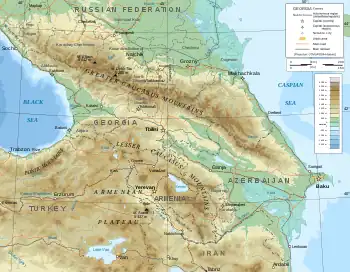
Topographic map of the Caucasus
Many extinction dates are unknown due to a lack of relevant information.
Mammals
Undated
| Common name scientific name |
Range | Image |
|---|---|---|
| Tarpan Equus ferus ferus |
Europe[1][2] | 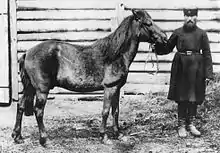 |
| Ochotona transcaucasica | Caucasus[3] |
Prehistoric
| Common name scientific name |
Extinction date | Range | Image |
|---|---|---|---|
| Eurasian aurochs Bos primigenius primigenius |
Iron Age[1] | Mid-latitude Eurasia | 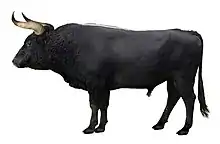 |
| European wild ass Equus hemionus hydruntinus |
c. 1000 BCE[4] | Europe and southwest Asia | 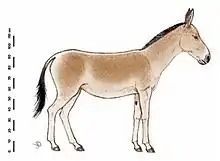 |
Recent
| Common name scientific name |
Extinction date | Range | Image |
|---|---|---|---|
| Caucasian moose Alces alces caucasicus |
c. 1900[5] | Northern Caucasus and Transcaucasian coast of the Black Sea | 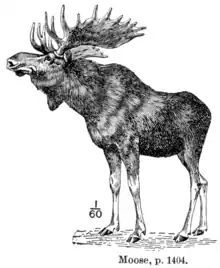 |
| Caucasian wisent Bison bonasus caucasicus |
1927[6] | Caucasus Mountains | 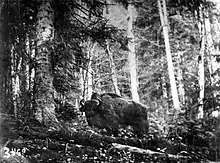 |
| Caspian tiger Panthera tigris virgata |
1964[7] | Caucasus, western and Central Asia | 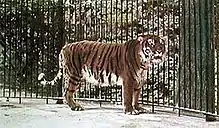 |
Local
| Common name scientific name |
Extinction date | Range | Image |
|---|---|---|---|
| Cheetah Acinonyx jubatus |
c. 3000 BCE[8] | Africa, western Asia, and India | 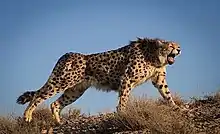 |
| Eurasian beaver Castor fiber |
19th century[1] | Europe and western Siberia |  |
| Persian onager Equus hemionus onager |
13th century[4] | Iran and the eastern Caucasus | .jpg.webp) |
| Lion Panthera leo |
900[7] | Africa, the Middle East, northern India, and southeastern Europe |  |
Birds
| Common name scientific name |
Extinction date | Range | Image |
|---|---|---|---|
| Slender-billed curlew Numenius tenuirostris |
20th century?[9][10] | Western Eurasia and North Africa | 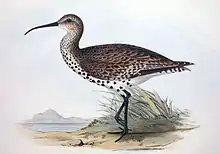 |
Fish
| Common name scientific name |
Extinction date | Range | Image |
|---|---|---|---|
| Beloribitsa Stenodus leucichthys |
1960s[11] | Caspian Sea, Volga, Ural, and Terek River drainages | 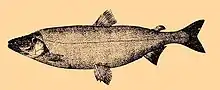 |
References
- Manaseryan, N., & Gyonjyan, A. (1995). "The Change of the Anthropogene Fauna of Armenia". In the Proceedings of the First International Mammoth Symposium, Saint-Petersburg, Russia (pp. 687-688).
- Chahoud, J., Vila, E., Bălăşescu, A., & Crassard, R. (2016). "The diversity of Late Pleistocene and Holocene wild ungulates and kites structures in Armenia". Quaternary International, 395, 133-153.
- Averianov, A. (2001). "Pleistocene lagomorphs of Eurasia". Deinsea, 8 (1), 1-14.
- Crees, Jennifer J.; Turvey, Samuel T. (May 2014). "Holocene extinction dynamics of Equus hydruntinus, a late-surviving European megafaunal mammal". Quaternary Science Reviews. 91: 16–29.
- Boeskorov, G.G. (2003) "The genetics of the modern moose and a review of its taxonomy". Cranium. 20, Vol. 2: 31-45.
- Bashkirov, I. S. (1939). "Caucasian European Bison". Moscow: Central Board for Reserves, Forest Parks and Zoological Gardens, Council of the People's Commissars of the RSFSR: 1–72. [In Russian.]
- Schnitzler, A., & Hermann, L. (2019). "Chronological distribution of the tiger Panthera tigris and the Asiatic lion Panthera leo persica in their common range in Asia". Mammal Review, 49 (4), 340-353.
- Manaseryan, N. (2017). 6. "Carnivora mammals of the Holocene in Armenia". In Archaeozoology of the Near East, p. 76.
- Hume, J.P. (2017) Extinct Birds. Bloomsbury Publishing.
- Gretton, A. (1991) The Ecology and Conservation of the Slender-Billed Curlew (Numenius tenuirostris). International Council for Bird Preservation.
- Freyhof, J.; Kottelat, M. (2008). "Stenodus leucichthys". IUCN Red List of Threatened Species. 2008: e.T20745A9229071. doi:10.2305/IUCN.UK.2008.RLTS.T20745A9229071.en. Retrieved 19 November 2021.
This article is issued from Wikipedia. The text is licensed under Creative Commons - Attribution - Sharealike. Additional terms may apply for the media files.