Unown N (Neo Discovery 50)
Unown [N] (Japanese: アンノーン [N] Unknown [N]) is a Psychic-type Basic Pokémon card. It is part of the Neo Discovery expansion.
| ||||||||||||||||||||||||
| ||||||||||||||||||||||||
| ||||||||||||||||||||||||

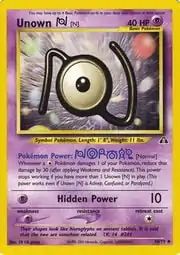


Card text
| |||||
| |||||
| |||||
|


Release information
This card was included in the Neo Discovery expansion. In Japan, it was one of nine Unnumbered Promotional cards available in the Premium File 2, which was initially sold at participating cinemas showing Spell of the Unown: Entei from July 8, 2000 and was followed by a general release on August 5, 2000.
Trivia
- This is one of only three Neo Series Unown cards where the Pokémon Power name is not the same as the word associated with that particular Unown in the Unown Mode of the Pokédex. (The word associated with Unown N in the games is "Nuzzle".) The other two Unown to share this trait are Unown D and Unown M.
- The Japanese print features the Crossing the Ruins... symbol, indicating that it is a promotional addition to the expansion.
Origin
Hidden Power is a move in the Pokémon games that Unown can learn. This card's English Pokédex entry comes from Pokémon Gold, whereas the Japanese entry comes from Pokémon Silver.
 |
This article is part of Project TCG, a Bulbapedia project that aims to report on every aspect of the Pokémon Trading Card Game. |
This article is issued from Bulbagarden. The text is licensed under Creative Commons - Attribution - Sharealike. Additional terms may apply for the media files.